

The development of effective therapies for Idiopathic Pulmonary Fibrosis (IPF) relies fundamentally on selecting the appropriate in vivo preclinical mouse model. While the bleomycin model remains the cornerstone of preclinical research services, achieving maximal clinical relevance is not about finding a single “best” model, but rather matching the model’s kinetics and pathology to the compound’s mechanism of action and intended clinical stage.
As an experienced preclinical contract research organization, Gubra provides a strategic portfolio of bleomycin pulmonary fibrosis model variants, each paired with objective, high-fidelity endpoints such as spirometry and AI-driven Ashcroft scoring, to maximize translational and predictive power.
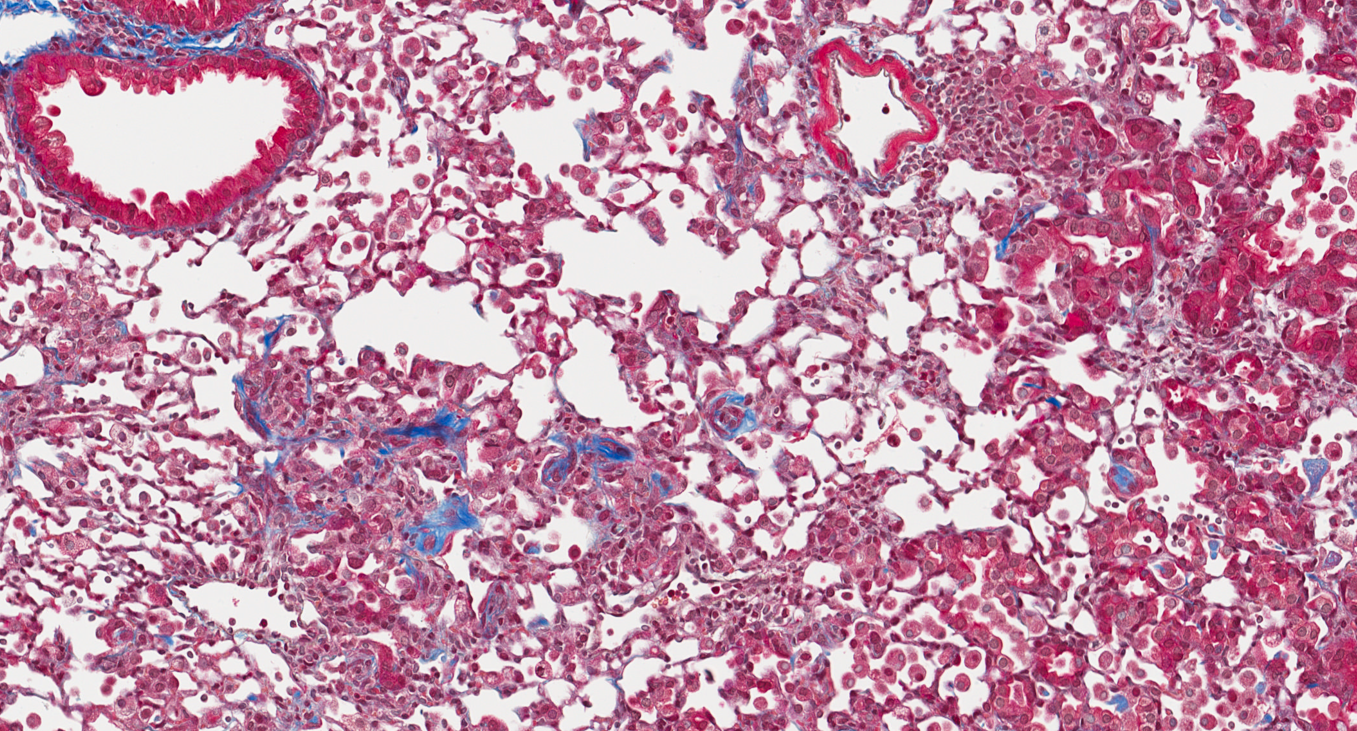
What is bleomycin?
Bleomycin is an antitumor antibiotic used primarily in the treatment of various cancers. The drug works by binding to and damaging the DNA (and RNA) of rapidly dividing cells, which inhibits their growth and causes cell death. Crucially for drug development, a known, serious side effect of bleomycin in patients is lung toxicity, which leads to pulmonary fibrosis. This reliable ability to induce lung scarring is precisely why bleomycin is used in preclinical models to generate bleomycin-induced pulmonary fibrosis for testing new antifibrotic treatments.
The single-dose bleomycin-induced pulmonary fibrosis mouse model
The standard single-dose BLEO-IPF mouse model is the globally accepted standard for initiating studies in lung fibrogenesis. It is reproducible, widely accessible, and it effectively mimics many core pathophysiological aspects of pulmonary fibrosis.
Application for clinical relevance
This model is the primary platform for assessing compounds targeting established fibrosis. The model follows a distinct three-phase kinetics: an initial inflammatory phase (Days 1–7), fibroproliferation (Days 3-14), and established fibrosis (Days 14-28). For the highest clinical relevance, the timing of therapeutic intervention is critical. Studies must commence treatment after the inflammatory phase (typically Day 7 or later) to ensure the measured effect is genuine anti-fibrotic efficacy rather than merely dampening transient inflammation.
Key translational features
The single-dose model is optimized using dual-validated measurement technologies:
- Spirometry-confirmed lung function: The progressive decline in respiratory capacity is the definitive clinical hallmark of IPF. We utilize invasive spirometry to measure crucial restrictive deficits, such as Forced Vital Capacity (FVC), which is the gold standard endpoint in human IPF trials. This functional assessment validates that the model replicates the human disease phenotype. For example, our research demonstrating reproducible protective effects of a TGF-βR1/ALK5 inhibitor confirms the model’s sensitivity for functional efficacy assessment.
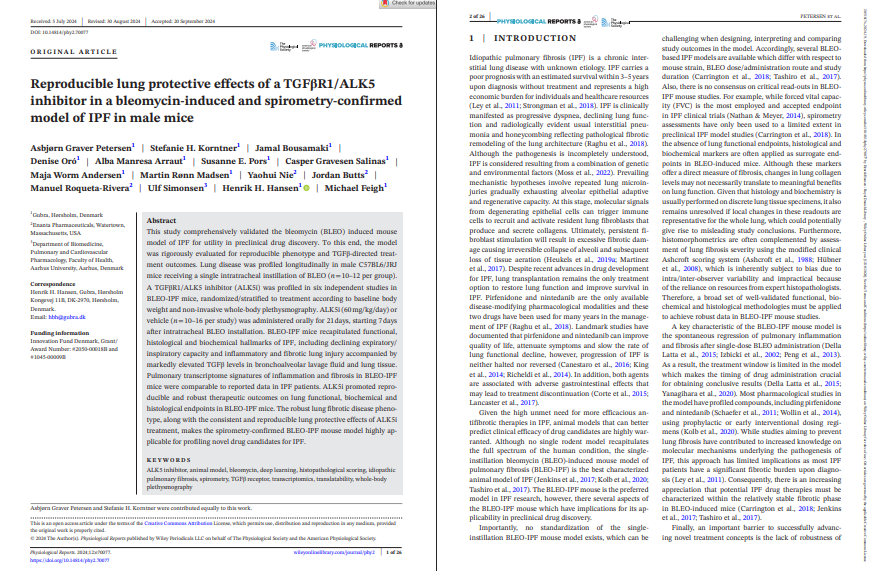
Explore the research here
- AI-driven histopathology: To overcome the inherent subjectivity and variability of traditional manual Ashcroft scoring, Gubra applies its proprietary GHOST (Gubra Histopathological Objective Scoring Technology) AI pipeline. Ashcroft scoring is a histopathological method for grading pulmonary fibrosis in preclinical models, using a 0-8 scale from normal lung to severe fibrosis based on tissue structure and collagen deposition. This platform for digital pathology preclinical research provides objective, reproducible quantification of fibrosis severity, showing a high degree of agreement with expert scoring in Gubra’s bleomycin-induced models. Our detailed research on automated AI-assisted Ashcroft scoring confirms how this pipeline eliminates the subjectivity inherent in manual scoring, a critical step for maximizing data reliability.
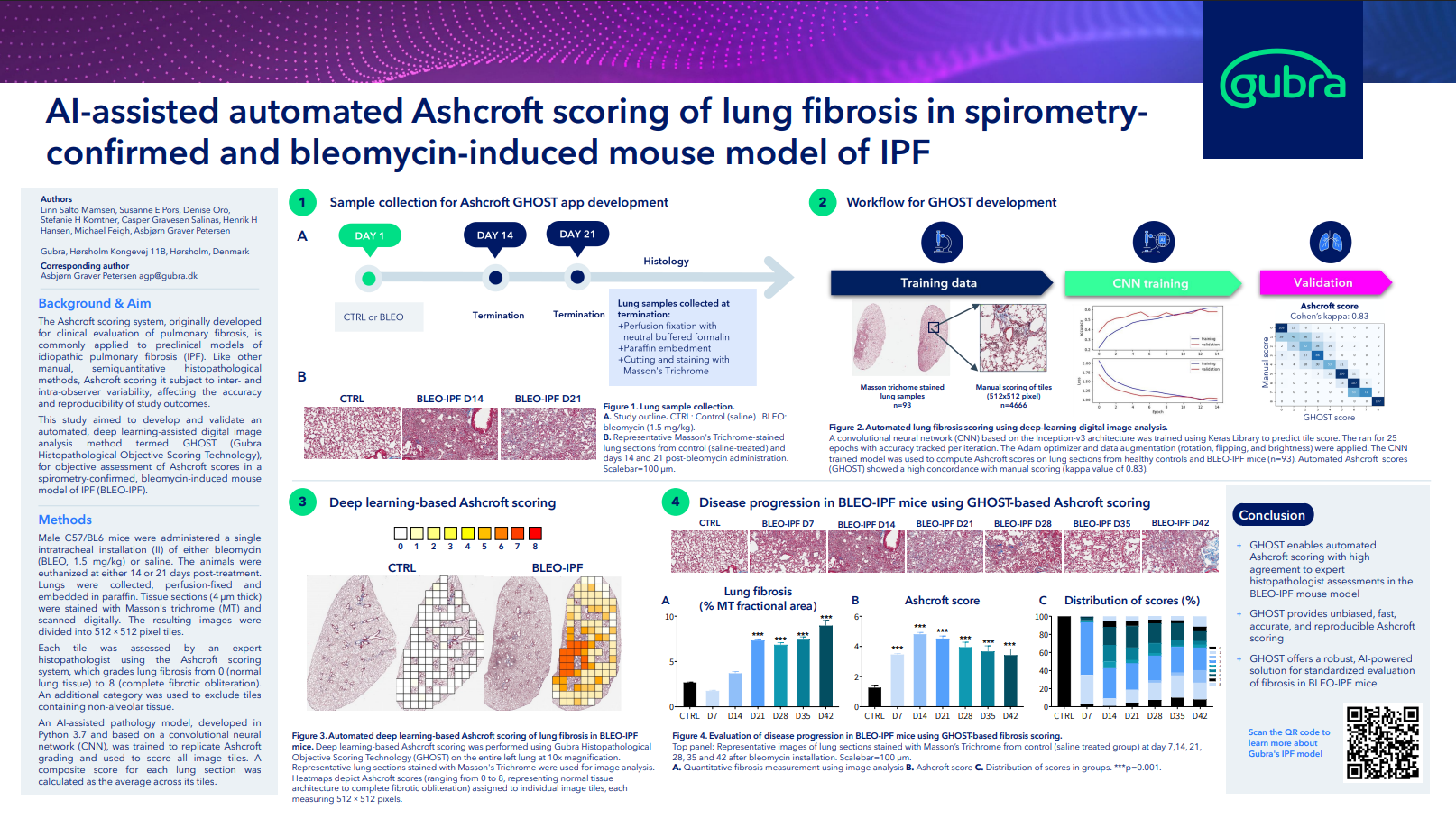
Explore the research here
- Plethysmography: Whole-body plethysmography provides a non-invasive method to assess ventilatory parameters in preclinical studies. We have determined that Enhanced Pause (PenH), a dimensionless index of ventilatory timing, can be effectively used to randomize and stratify animals prior to treatment. This approach ensures that only subjects with the appropriate disease phenotype are enrolled, thereby reducing variability in the study.
The repetitive-dose bleomycin-induced pulmonary fibrosis mouse model
For therapeutic candidates aimed at advanced or chronic disease, the short duration of the single-dose model reduces its relevance because fibrosis naturally regresses over time. The repetitive-dose bleomycin model addresses this by inducing chronic and persistent fibrosis that better mirrors the relentless progression of human IPF.
Key translational features
Gubra’s characterization confirms that repetitive bleomycin instillations successfully establish a novel model featuring persistent and progressive pulmonary fibrosis, specifically designed to overcome the spontaneous resolution seen in single-dose models.
- Chronic progression: Repetitive dosing promotes persistent quantitative histology markers and demonstrate that fibrosis is not only persistent but progressive, showing further increases at later time points.
- Structural remodeling: This model exhibits sustained tissue remodeling, providing a robust platform for investigating long-term fibrotic changes.
By applying the same objective functional (spirometry) and histological (GHOST) endpoints, the repetitive-dose model provides a robust, high-fidelity platform for compounds aimed at modulating the complexities of long-term bleomycin pulmonary fibrosis progression.
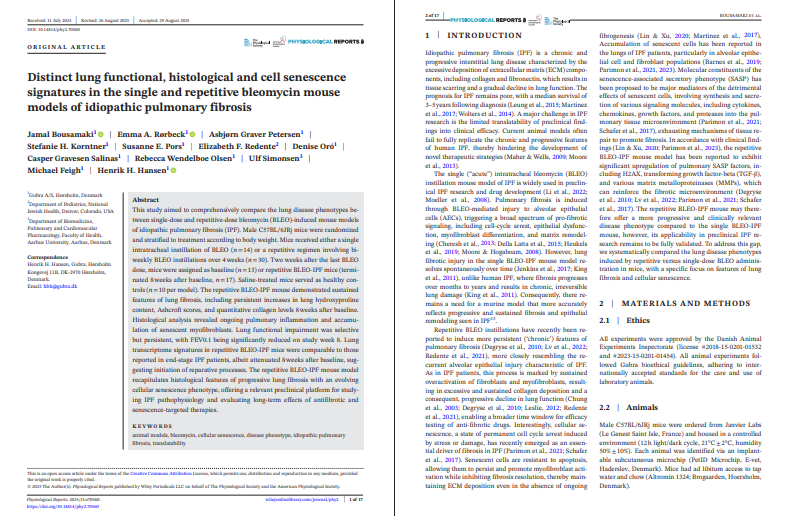
Explore the research here
Strategic preclinical IPF model selection
Selecting the most clinically relevant bleomycin mouse model is a critical strategic decision that dictates the success of IPF drug development. The choice hinges on aligning the study goals, whether testing acute anti-fibrotic efficacy (single-dose model) or modulating chronic, progressive remodeling (repetitive-dose model) with the appropriate model kinetics.
Gubra’s advanced approach, which pairs these strategic model variants with objective, dual-validated endpoints, minimizes translational risk. By integrating clinically relevant functional readouts like FVC via spirometry and eliminating histological subjectivity through AI-driven Ashcroft scoring (GHOST), we ensure your therapeutic candidates are evaluated with maximum precision and predictive confidence.
Ready to design a translational study that delivers actionable data? Contact Gubra today to explore our full range of preclinical IPF models and services.


