
Choosing a preclinical CRO for drug development in metabolic and fibrotic diseases demands hyper-specialization. At Gubra, we are a dedicated preclinical CRO expert in metabolic and fibrotic therapeutic areas, leveraging deep knowledge of lipid metabolism and inflammation to accelerate discovery across the pipeline.
While our primary focus spans metabolic and fibrotic diseases, our expertise naturally extends to related pathologies like atherosclerosis. Biopharma and biotech companies can leverage our capabilities, specifically our validated DIO LDLR-KO and DIO AAV-PCSK9 mouse models and breakthrough 3D Plaque Imaging platform, to generate unparalleled precision in cardiovascular efficacy testing, accelerating your preclinical drug discovery.
Specialized preclinical DIO mouse models for robust drug efficacy testing
The early phase of drug development is critical. To yield translational data, efficacy testing must use models that accurately mimic human disease pathology and risk factors.
The gold standard: DIO-LDLR-KO mouse model
The Low-Density Lipoprotein Receptor Knockout mouse, or LDLR-KO mouse model, is a foundational platform in cardiovascular research. When coupled with a Western-style diet to induce Diet-Induced Obesity (DIO), this model provides an exceptional platform for preclinical drug efficacy testing:
- Human-like Dyslipidemia: Lacking the LDLR means the mice cannot efficiently clear LDL-C (low-density lipoprotein cholesterol), leading to severe dyslipidemia (elevated LDL-C and triglycerides) that closely mirrors human hypercholesterolemia.
- Progressive Plaque Formation: The model exhibits widespread and reproducible plaque development throughout the arterial tree, making it ideal for studying both disease progression and the effects of novel therapies.
- Study Applications: This model is excellent for pharmacodynamics evaluation of therapeutics targeting cholesterol metabolism, inflammation, and metabolic syndrome.
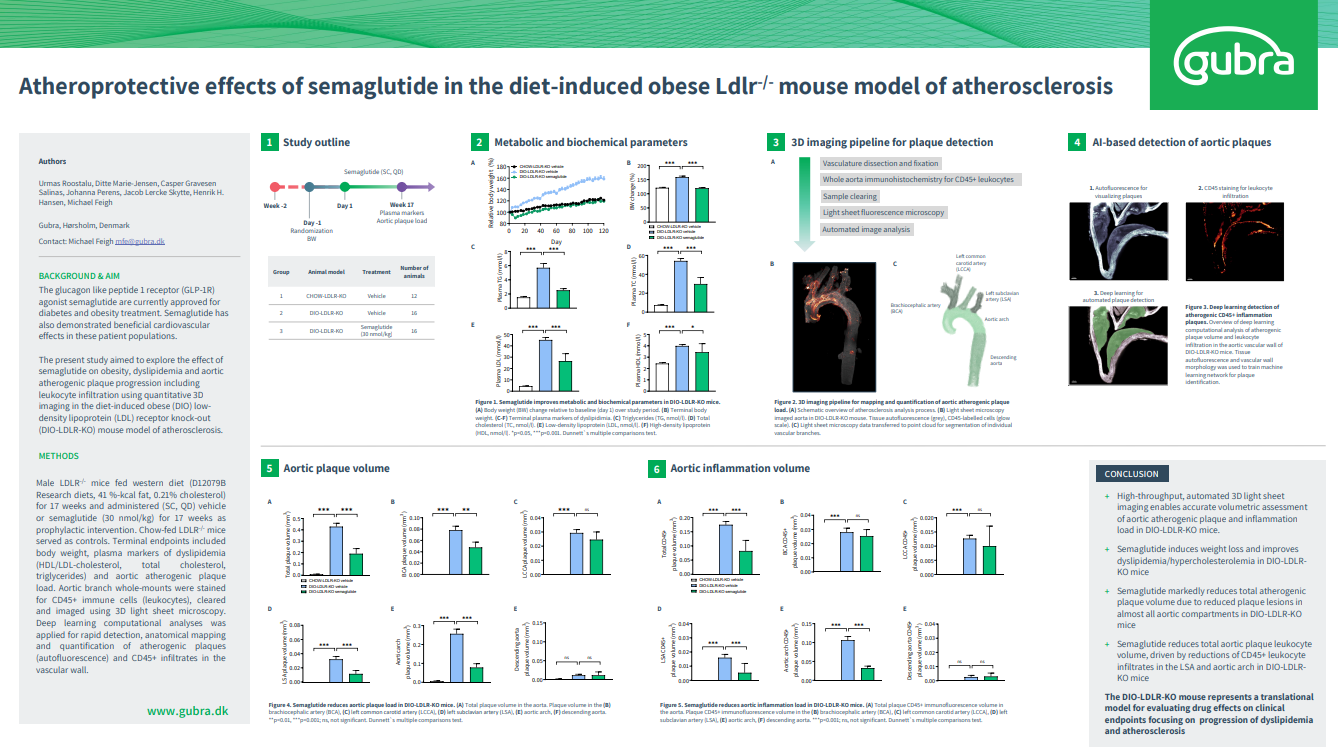
Our research using the DIO-LDLR-KO mouse demonstrates its predictive power:
The accelerated solution: DIO-AAV-PCSK9 mouse model
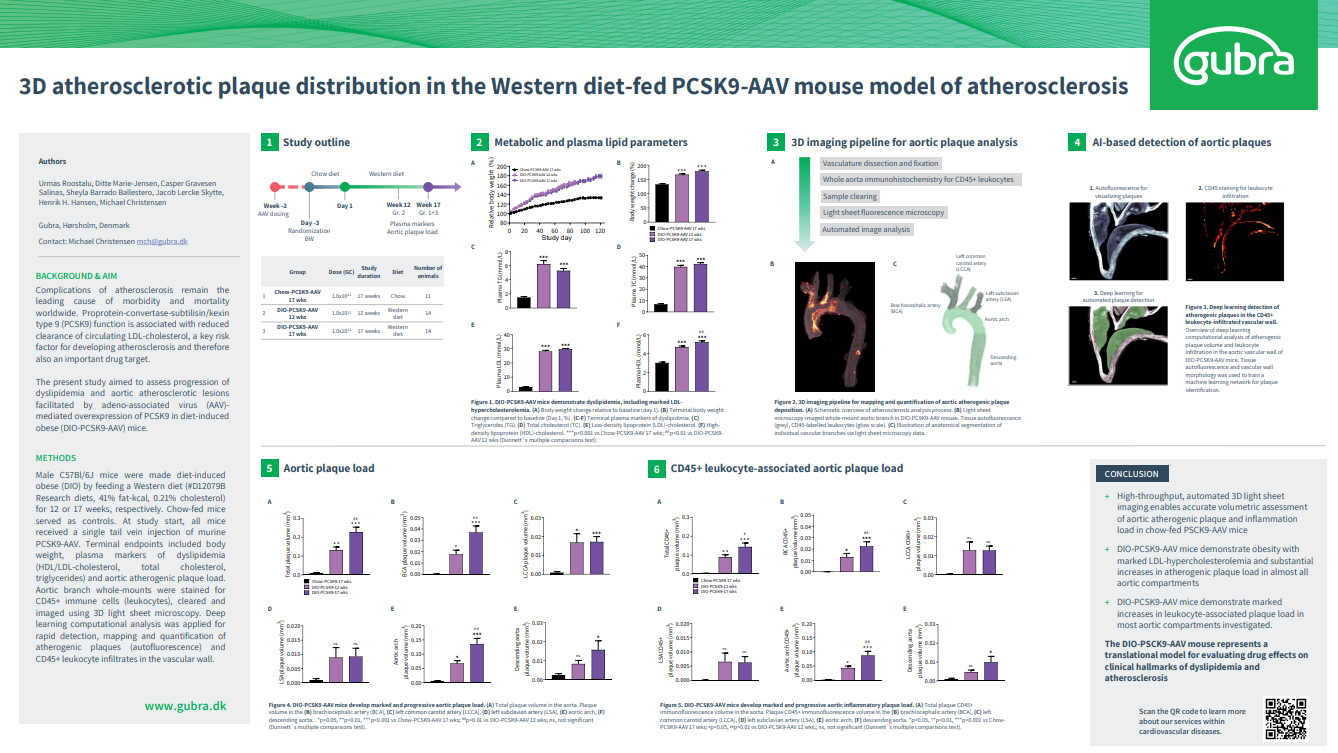
For researchers requiring faster results or focused on novel lipid-lowering targets, our DIO-AAV-PCSK9 mouse model offers a highly efficient alternative. This model involves injecting an AAV vector that drives the overexpression of PCSK9—a protein that promotes the breakdown of the LDLR. When combined with a Western-style diet, the animals develop diet-induced obesity (DIO) and pronounced LDL-hypercholesterolemia, creating a translational model that mimics human dyslipidemia and atherosclerosis progression.
- Key Advantage: This single-injection method causes a rapid, robust increase in circulating LDL-C, dramatically accelerating the onset of atherosclerosis and shortening study timelines.
- Versatility: The AAV-PCSK9 model is perfect for fast-paced compound screening, high-throughput testing, and investigating the complex link between metabolic syndrome and atherosclerosis.
Beyond 2D: advanced 3D plaque quantification
The efficacy of an anti-atherosclerotic compound is only as good as the method used to measure it. Traditional atherosclerosis histology, which relies on analyzing thin 2D slices, is slow, labor-intensive, and inherently prone to missing vital volumetric data.
Our atherosclerosis research capabilities stand out due to our proprietary 3D atherosclerotic plaque imaging platform:
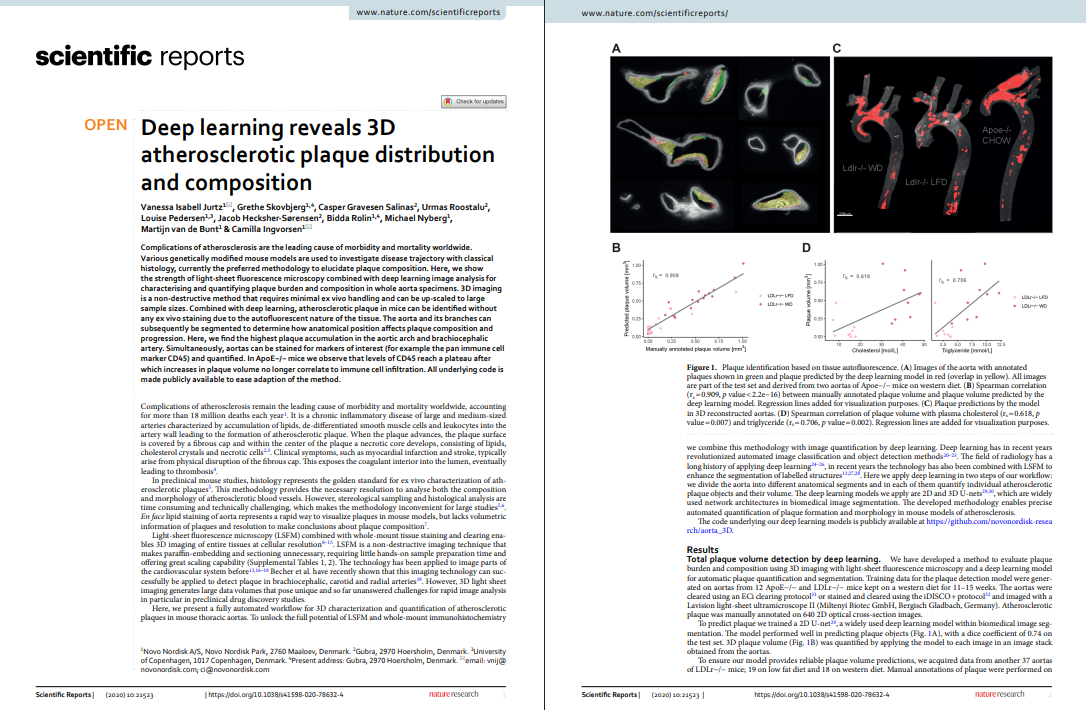
- Tissue Clearing and Light Sheet Microscopy: We optically clear entire arteries (such as the aorta, carotid, and brachiocephalic) and utilize light sheet fluorescence microscopy (LSFM). This allows for high-resolution, full-volume imaging of the entire vasculature.
- Unbiased Deep Learning Analysis: The vast 3D datasets are then processed by our proprietary deep learning algorithms. This automated process performs precise plaque analysis and quantification of:
- Total Plaque Volume and Distribution
- Plaque Inflammation (e.g., Macrophage/Leukocyte burden via CD45 staining)
- Plaque Composition and Morphology
This unique capability provides objective, high-throughput data that is essential for robustly assessing drug effects, particularly in sensitive plaque regression studies.
Learn more in our research published in Scientific Reports, Deep Learning Reveals 3D Atherosclerotic Plaque Distribution and Composition:
Partner with a preclinical CRO expert
If your company is searching for reliable preclinical CRO companies to handle your DIO-LDLR-KO studies or to leverage the accelerated DIO-AAV-PCSK9 mouse model, partner with Gubra. We deliver the high-quality, translational data needed to confidently advance your therapy through the stages of drug development and into the clinic.
Ready to start?
- Request a scientific consultation today: Speak directly to our scientific team about customizing your preclinical atherosclerosis study here.