
The global obesity therapeutics market has entered a new era, and the anti-obesity drug development trends that characterized 2024 are already evolving. The clinical success of the GLP-1 receptor agonist semaglutide (STEP trials, 2021) and the dual GLP-1/GIP receptor agonist tirzepatide (SURMOUNT-1, 2022) delivered unprecedented weight loss, redefining expectations for pharmacological obesity treatment and establishing incretin biology as a transformative therapeutic modality. More recently, the triple GLP-1/GIP/glucagon (GCG) receptor agonist retatrutide has demonstrated weight loss in the phase 3 TRIUMPH-1 clinical trial that appears to surpass the efficacy achieved with previous incretin-based therapies, further raising the benchmark for anti-obesity treatment.
These clinical advances have fundamentally reshaped the understanding of obesity, shifting its perception from a lifestyle-related condition to a complex chronic metabolic disease characterized by insulin resistance, cardiovascular risk, and systemic inflammation. In parallel, the pharmaceutical industry has substantially increased investment in obesity research and development, fueling a rapidly expanding pipeline of next-generation anti-obesity therapies.
As a result of recent advances in anti-obesity therapeutics, obesity trends in 2026 reflect a clear transition beyond first-generation incretin-based therapies. The industry’s focus is shifting from whether substantial weight loss can be achieved to how treatment can be optimized.
Increasingly, focus is placed on the durability and quality of weight loss, including cardiometabolic improvements, enhanced liver and kidney health, and sustained long-term outcomes. Importantly, oral anti-obesity drugs are becoming a major battleground, as demonstrated by the recent approval of two once-daily oral GLP-1 receptor agonists, semaglutide and orforglipron.
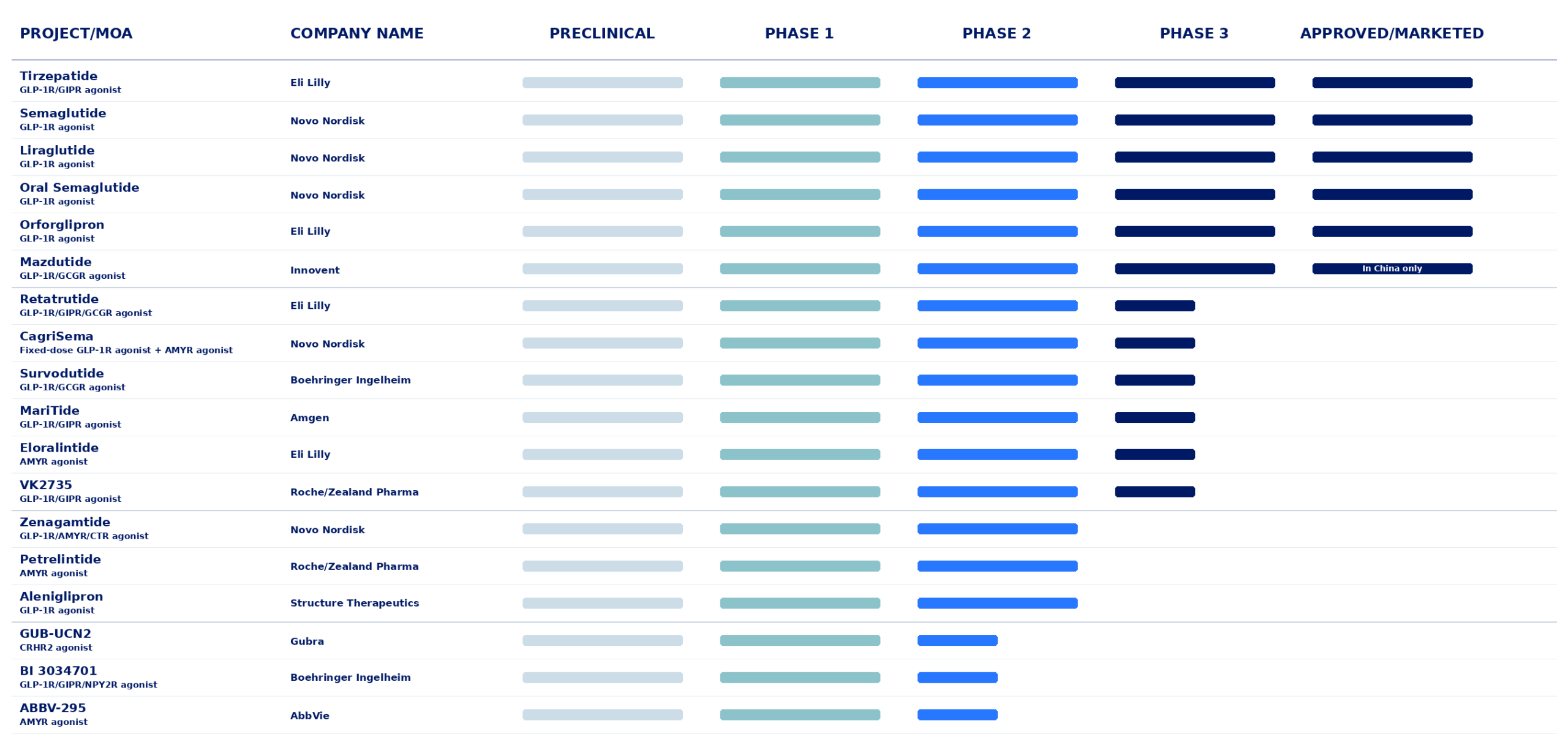
Selected clinical and emerging obesity drug candidates by development stage (as of 26 August 2026)
Two key trends shaping anti-obesity drug development
Oral GLP-1 therapies in obesity treatment
Oral GLP-1 receptor agonists are emerging as a critical next wave in cardiometabolic therapeutics. While the class has demonstrated robust efficacy across glycemic control, weight loss, and cardiovascular outcomes, peptide-based GLP-1 receptor agonists remain constrained by poor oral bioavailability, necessitating subcutaneous administration and limiting adherence, scalability, and access. Novo Nordisk’s oral semaglutide represents an important step forward, with approvals spanning type 2 diabetes (Rybelsus, PIONEER trials), obesity (Wegovy, OASIS 1 trial), and cardiovascular risk reduction. However, its clinical utility is still shaped by peptide-related limitations, including strict fasting requirements and higher oral dosing relative to injectables, factors that may impact cost and patient adherence.
These constraints have accelerated the development of non-peptide, small-molecule oral GLP-1 receptor agonists. Eli Lilly’s orforglipron (Foundayo, ATTAIN-1 trial) has emerged as the leading candidate, demonstrating competitive glycemic and weight-loss efficacy in Phase 3 trials and securing FDA approval in obesity, with type 2 diabetes (ACHIEVE-1 trial) label expansion anticipated. As the first small-molecule GLP-1 receptor agonist to reach this stage, it marks a pivotal shift toward more scalable, patient-friendly oral therapies.
Muscle preservation and body composition in obesity treatment
Emerging evidence indicates that rapid pharmacologically induced weight loss is often accompanied by reductions in lean mass, raising concerns around sarcopenia and downstream functional outcomes. This has sharpened industry focus on therapeutic strategies that not only drive fat loss but also monitor and preserve muscle health. Clinical data consistently show that a substantial proportion of weight loss with GLP-1-based therapies, up to ~40%, can be attributed to lean mass, including metabolically active skeletal muscle. This shift in body composition is clinically meaningful: loss of muscle reduces resting energy expenditure, lowers daily caloric requirements, and may predispose patients to weight regain following treatment discontinuation or reduced adherence. Beyond metabolic implications, declining muscle mass and strength increase the risk of sarcopenia and functional impairment, particularly in older populations or individuals with low baseline muscle reserves. While emerging evidence suggests potential improvements in muscle quality during GLP-1- based treatment, preservation of absolute muscle mass and functional capacity remains an unmet need.
Taken together, these findings are driving a paradigm shift in obesity management. Future therapies will need to go beyond weight reduction alone, optimizing body composition by maximizing fat loss while preserving muscle, to support durable metabolic health and long-term functional outcomes. Activin type II receptor (ActRII) blockers are emerging as a promising strategy for sarcopenic obesity, due to their ability to increase muscle mass while reducing fat. By inhibiting myostatin and activin signaling, these agents promote muscle growth and improve body composition. Initial clinical development, particularly with bimagrumab, targeted primary sarcopenia, where increases in lean mass failed to translate into functional improvements, limiting clinical progress. The focus has since shifted to obesity and body composition, where Phase 2 data show meaningful fat loss alongside preservation or gain of lean mass. More recently, combination approaches with GLP-1 receptor agonists have gained momentum, aiming to improve the quality of weight loss by minimizing muscle loss. However, clinical success will depend on demonstrating functional benefits, not just body composition changes. Overall, ActRII blockers represent a shift toward therapies that optimize fat loss while preserving muscle in obesity treatment.
The obesity drug development landscape in 2026 is no longer defined solely by the magnitude of weight loss. Instead, it reflects a broader shift toward biologically balanced, durable, and clinically meaningful metabolic therapies – in essence, enabling healthy weight loss.
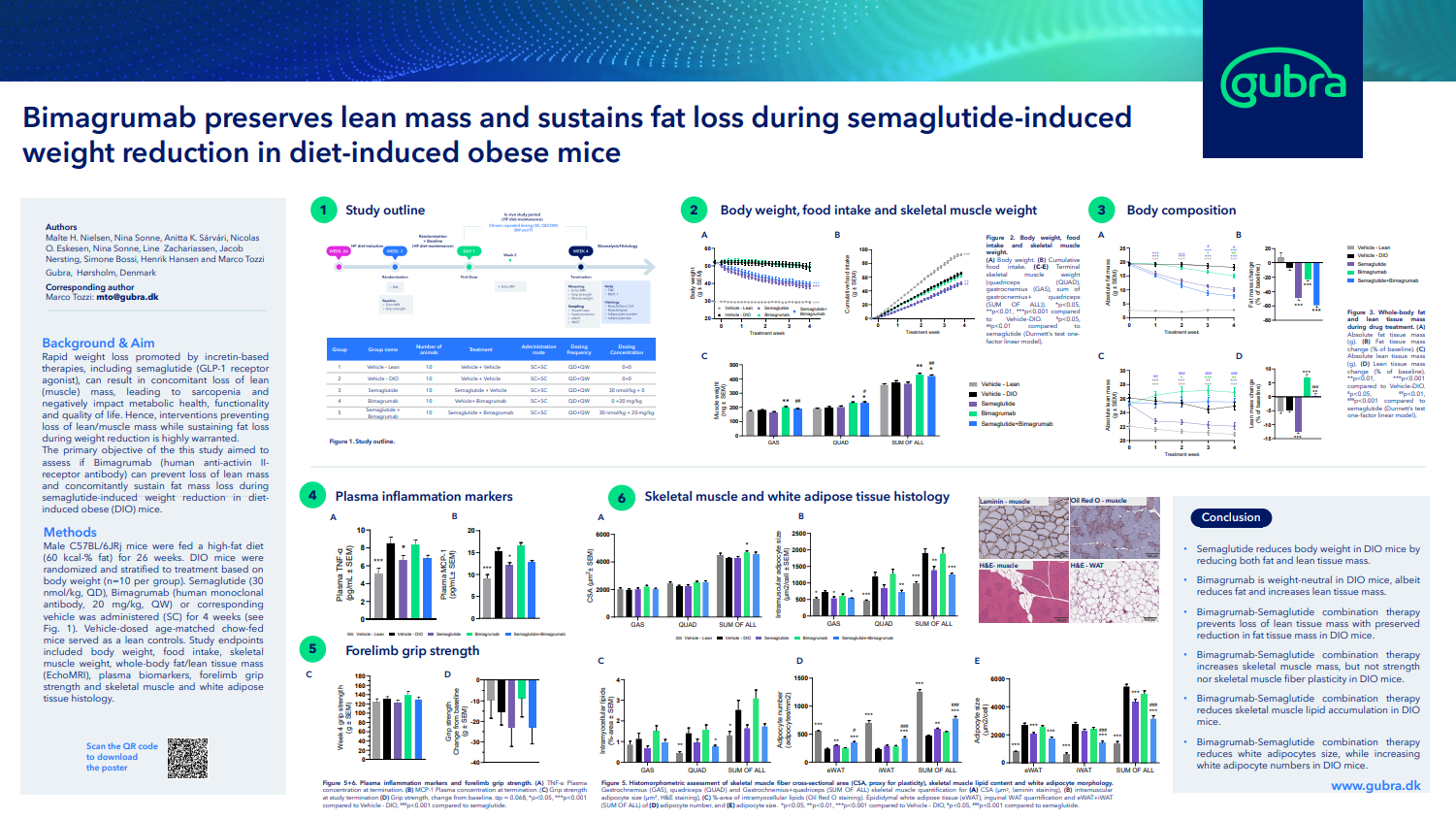
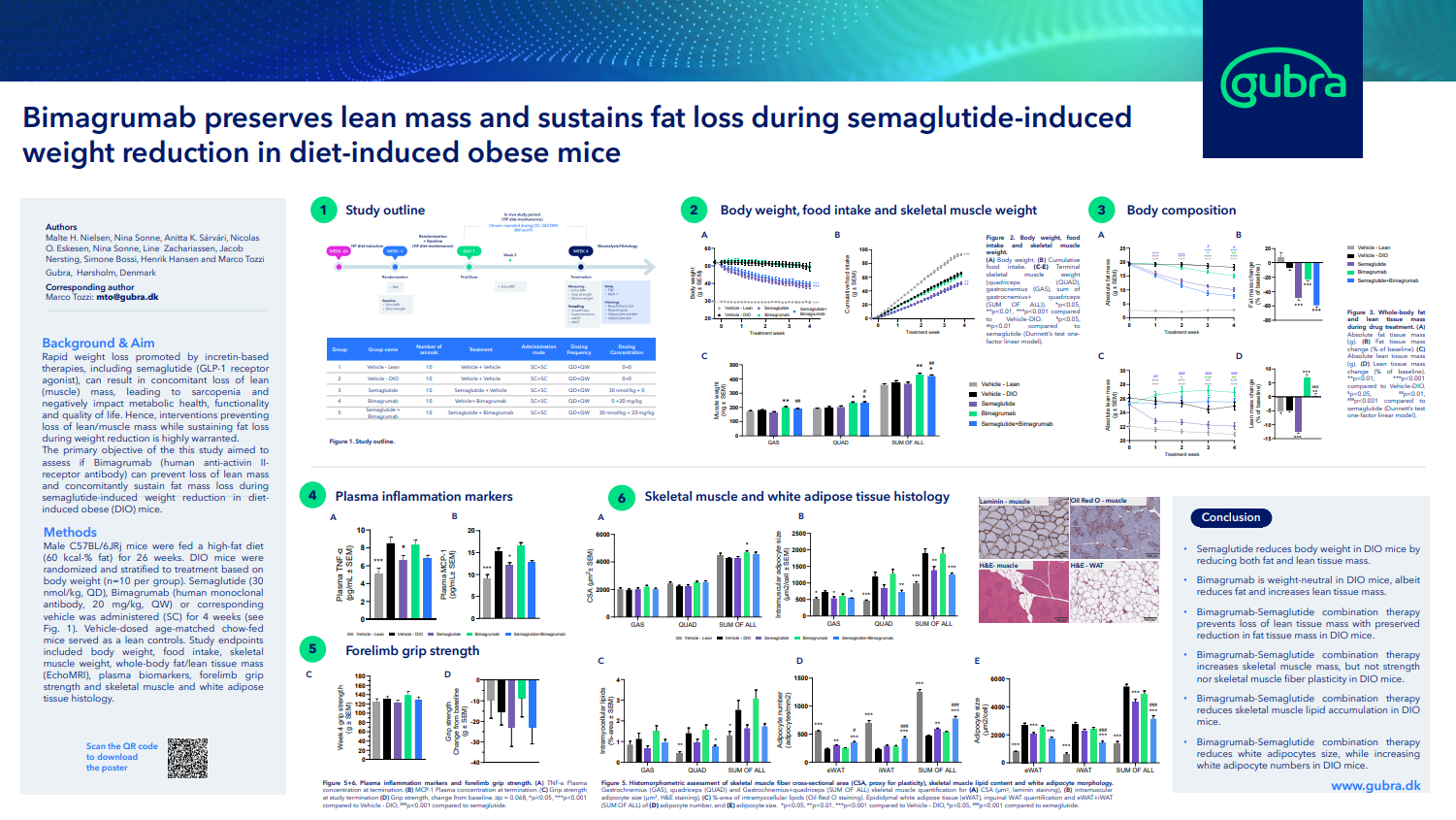
Bimagrumab preserves lean mass and sustains fat loss during semaglutide-induced weight reduction in diet-induced obese mice
Humanized mouse models for obesity research
Previous structural and pharmacological studies have demonstrated that small-molecule GLP-1 receptor agonists, including orforglipron and danuglipron, are inactive at the rodent GLP-1 receptor, reflecting a binding mode distinct from peptide-based agonists. Unlike peptide GLP-1 receptor agonists, which engage the receptor via a two-step mechanism, these small molecules interact with a unique site in the extracellular domain. Receptor activation by small-molecule GLP-1 receptor agonists depends on a primate-specific epitope containing a critical tryptophan residue, which is not required for activation by peptide ligands.
This species-specific pharmacology creates a significant translational challenge, as conventional rodent models fail to reliably predict human responses. Consequently, the development of small-molecule GLP-1 receptor agonists requires alternative preclinical strategies that enable robust assessment of efficacy, safety, and mechanism of action. To address this, Gubra has developed and validated a CRISPR-Cas9-engineered humanized GLP-1 receptor knock-in (hGLP1R) mouse model, providing a translationally relevant platform for preclinical drug discovery.
Generation and characterisation of a humanised GLP-1 receptor mouse model for translational drug development
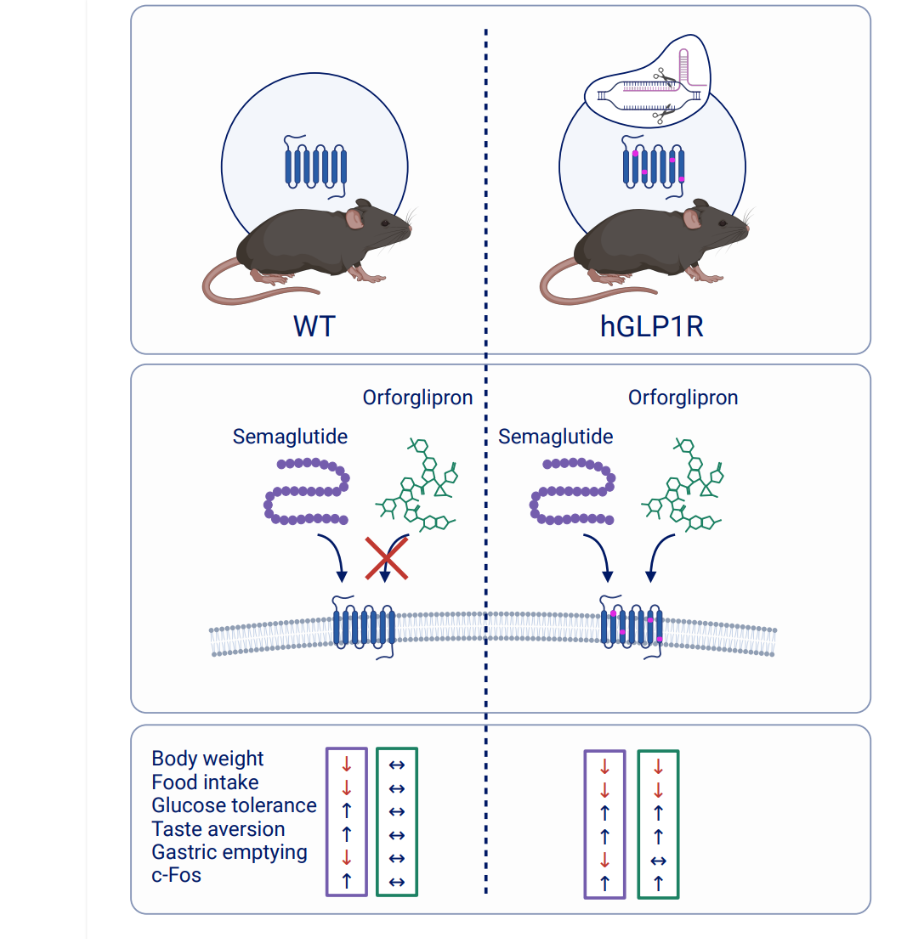
CRISPR-Cas9-engineered humanized GLP-1 receptor knock-in (hGLP1R) mouse model
Profiling drug candidates with muscle-preserving effects
Accurate assessment of muscle mass and morphology remains a key challenge in preclinical drug development for sarcopenia and cachexia. Gubra addresses this with industry-leading 3D imaging, enabling high-resolution visualization and quantification of muscle architecture at a near single-cell level and comprehensive quantification of treatment effects across intact skeletal muscle. Gubra’s proprietary 3D light sheet fluorescence microscopy (LSFM) imaging platform supports automated, unbiased analysis of multiple histological endpoints in intact rodent hind limbs.
Integrated with in vivo metabolic profiling, body composition analysis, muscle functional assessments, and targeted histology, the platform provides a multidimensional view of muscle biology. This end-to-end approach delivers robust, data-driven insights, accelerating the development of therapies targeting sarcopenia and muscle-wasting disorders.
AI-based segmentation and volume quantification of mouse whole-hindleg muscles, including anterior muscle groups using autofluorescence-based LSFM
High-throughput 3D skeletal muscle imaging for preclinical research
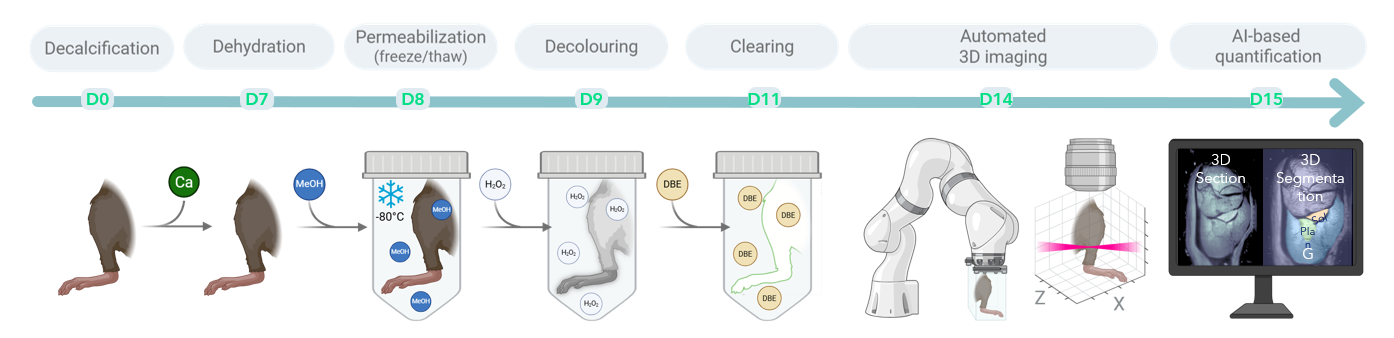
Schematic overview of the standardized pipeline for tissue processing and 3D imaging of mouse/rat hindlimbs. At study termination, whole, deskinned hindlimbs are immersion-fixed for two nights, followed by decalcification (Ca) in 10% EDTA for seven days. Samples are then dehydrated (MeOH, methanol) and subjected to freeze–thaw cycles before bleaching in hydrogen peroxide (H2O2) and optical clearing with dibenzyl ether (DBE).
Once transparent, whole hindlimbs are automatically scanned using a barcode-based system and robotic arm for sample loading into a light-sheet fluorescence microscope (LSFM). Image segmentation and quantitative analysis are performed using advanced AI models.
3D light-sheet fluorescence microscopy in preclinical and clinical drug discovery
High-throughput 3D skeletal muscle imaging pipeline
High-Throughput 3D Imaging for Quantifying Dexamethasone-Induced Skeletal Muscle Atrophy in Mice
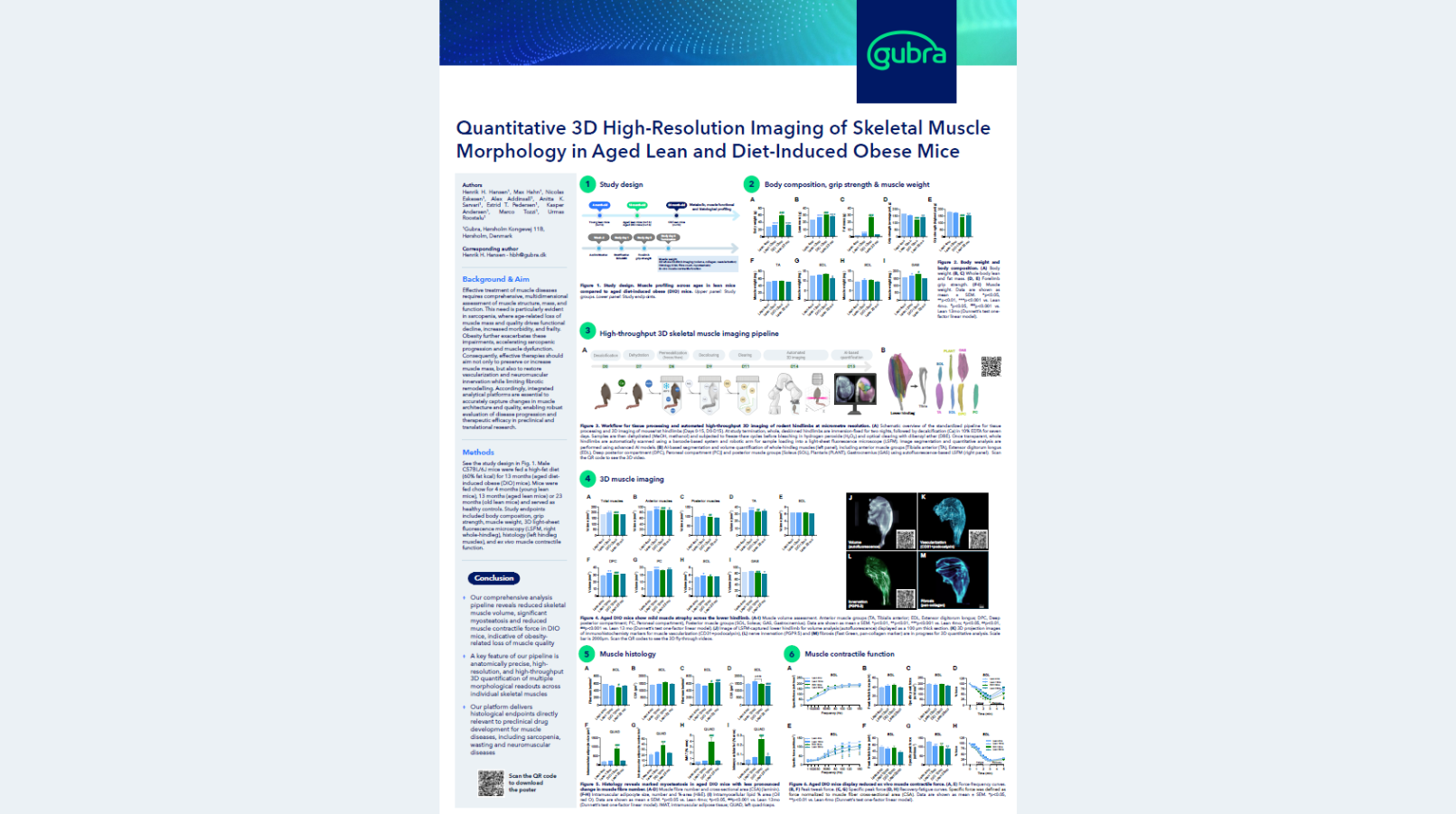
Quantitative 3D high-resolution imaging of skeletal muscle morphology in aged lean and diet-induced obese mice
Profiling next-generation obesity therapeutics at Gubra
The obesity drug development landscape in 2026 reflects a clear evolution from achieving weight loss to optimizing metabolic health outcomes. Advances in oral therapeutics, multi-target agonists, and muscle-preserving strategies are reshaping treatment paradigms, with increasing emphasis on durability, scalability, and quality of weight loss. As innovation accelerates, success will depend on translationally relevant models and comprehensive biological insights, positioning companies with integrated and predictive platforms to play a critical role in delivering the next generation of effective, patient-centric obesity therapies.
Gubra is strongly positioned at the forefront of next-generation anti-obesity drug development through its focus on translational precision and advanced preclinical modeling. By developing a humanized GLP-1 receptor mouse model, Gubra directly addresses one of the field’s key challenges, species-specific pharmacology, enabling more reliable prediction of clinical outcomes for emerging therapies such as small-molecule GLP-1 agonists. In parallel, its integrated 3D imaging and metabolic phenotyping platforms provide deep insights into body composition and muscle biology, supporting the industry’s shift toward therapies that optimize not just weight loss, but fat-to-muscle balance. Together, these capabilities allow Gubra to generate high-quality, decision-enabling data across the full spectrum of obesity drug discovery. Get in touch with our experts here.