
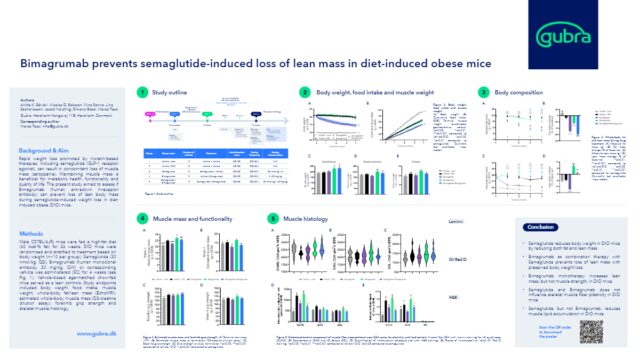
Background & aim: Effective treatment of muscle diseases requires comprehensive, multidimensional assessment of muscle structure, mass, and function. This need is particularly evident in sarcopenia, where age-related loss of muscle mass and quality drives functional decline, increased morbidity, and frailty. Obesity further exacerbates these impairments, accelerating sarcopenic progression and muscle dysfunction. Consequently, effective therapies should aim not only to preserve or increase muscle mass, but also to restore vascularization and neuromuscular innervation while limiting fibrotic remodelling. Accordingly, integrated analytical platforms are essential to accurately capture changes in muscle architecture and quality, enabling robust evaluation of disease progression and therapeutic efficacy in preclinical and translational research.
Poster
Quantitative 3D high-resolution imaging of skeletal muscle morphology in aged lean and diet-induced obese mice
Share this page
Related resources

For further information
Contact us
Gubra
Hørsholm Kongevej 11B
2970 Hørsholm
Denmark
+45 3152 2650