

Generation and characterisation of a humanised GLP-1 receptor mouse model for translational drug development
Background: Injectable peptide-based glucagon-like peptide-1 receptor (GLP1R) agonists (GLP1RAs) are effective treatments for obesity and diabetes but are limited by patient compliance and scalability challenges. In contrast, non-peptide small-molecule GLP1RAs offer the advantage of oral delivery but are relatively inactive…

GUB-UCN2 as Monotherapy and in Combination with Semaglutide Improves Body Composition and Metabolic Outcomes in Aged Diet-Induced Obese Rats
Background & aim: Glucagon-like peptide-1 receptor agonists, such as semaglutide, induce substantial weight loss but may adversely affect muscle mass. This is of particular concern in older adults with obesity, who are vulnerable to sarcopenia. Accordingly, obesity treatments should be…

Quantitative Characterization of a Dihydrotestosterone-Induced Mouse Model of Polycystic Ovary Syndrome Using Whole-Ovary 3D Imaging and Metabolic Profiling
Background & aim: Polycystic ovary syndrome (PCOS) affects approximately 10–15% of women of reproductive age and is a leading cause of anovulation and infertility. PCOS is frequently accompanied by hyperandrogenism, insulin resistance, and altered body composition. Androgen-induced mouse models reproduce…
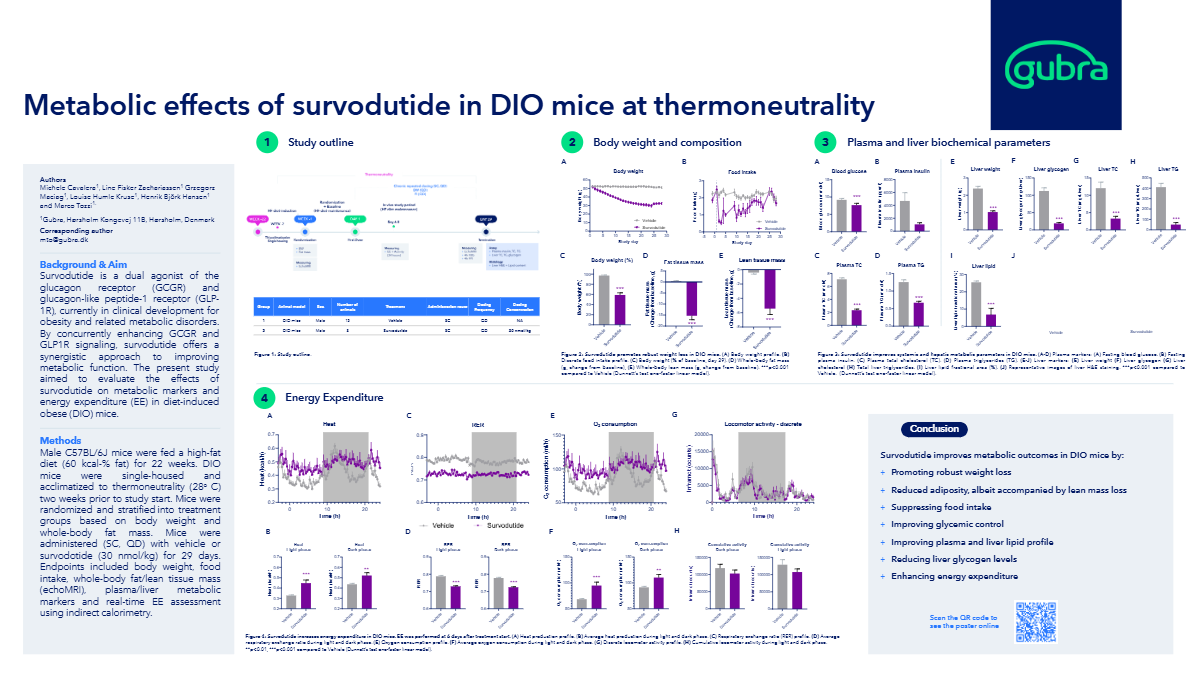
Metabolic effects of survodutide in DIO mice at thermoneutrality
Background & aim: Survodutide is a dual agonist of the glucagon receptor (GCGR) and glucagon-like peptide-1 receptor (GLP-1R), currently in clinical development for obesity and related metabolic disorders. By concurrently enhancing GCGR and GLP1R signaling, survodutide offers a synergistic approach…