


Deep learning-enhanced 3D imaging unveils semaglutide impact on cardiac fibrosis
Background & aim: Myocardial fibrosis (MF), a hallmark of structural cardiac remodelling, drives disease progression across most forms of heart failure and plays a central role in heart failure with preserved ejection fraction (HFpEF). Despite its clinical relevance, effective treatments…

Renal transcriptomic profiling reveals beneficial effects of semaglutide and lisinopril in advanced diabetic kidney disease
Background & aim: Obesity, hyperglycemia and hypertension are critical risk factors for development of diabetic kidney disease (DKD). While emerging evidence suggests that glucagon-like peptide-1 receptor (GLP1R) agonists improve cardiovascular and renal outcomes in type 2 diabetes patients, their mode…
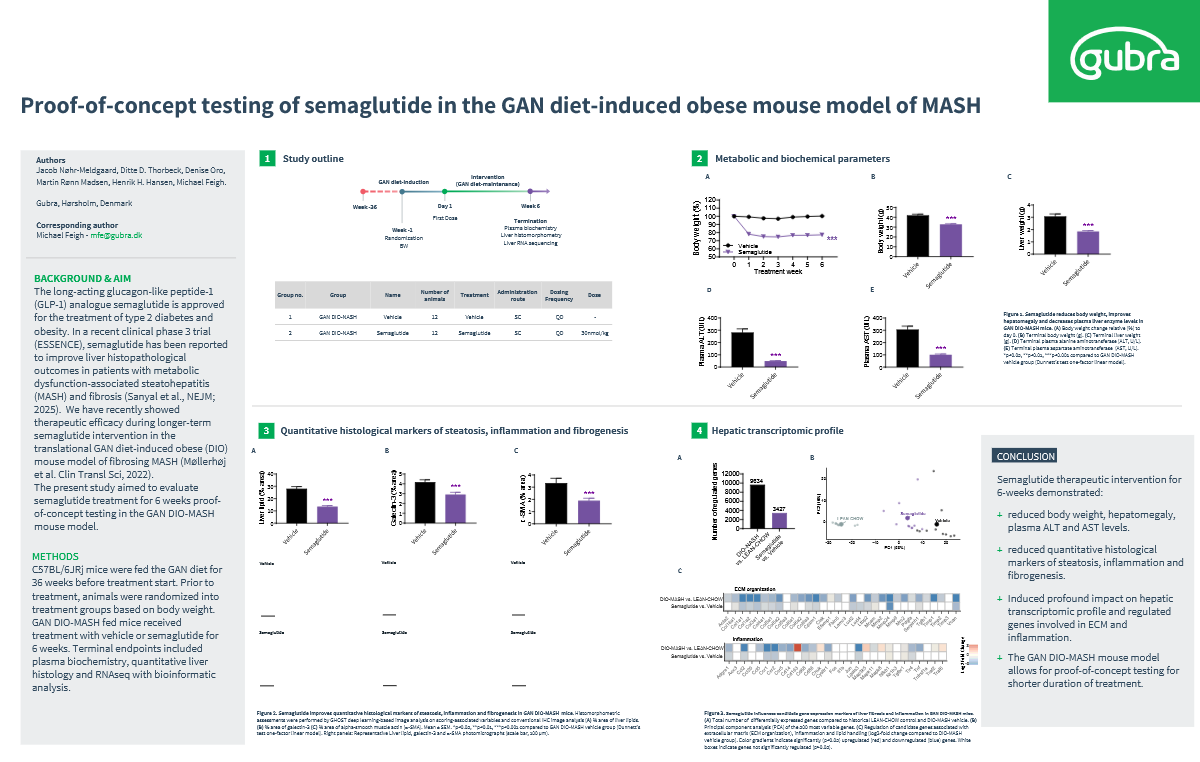
Proof-of-concept testing of semaglutide in the GAN diet-induced obese and biopsy-confirmed mouse model of MASH
Background & aim: The long-acting glucagon-like peptide-1 (GLP-1) analogue semaglutide is approved for the treatment of type 2 diabetes and obesity. Recently, semaglutide has been reported to improve liver histopathological outcomes in patients with metabolic dysfunction-associated steatohepatitis (MASH) and fibrosis…
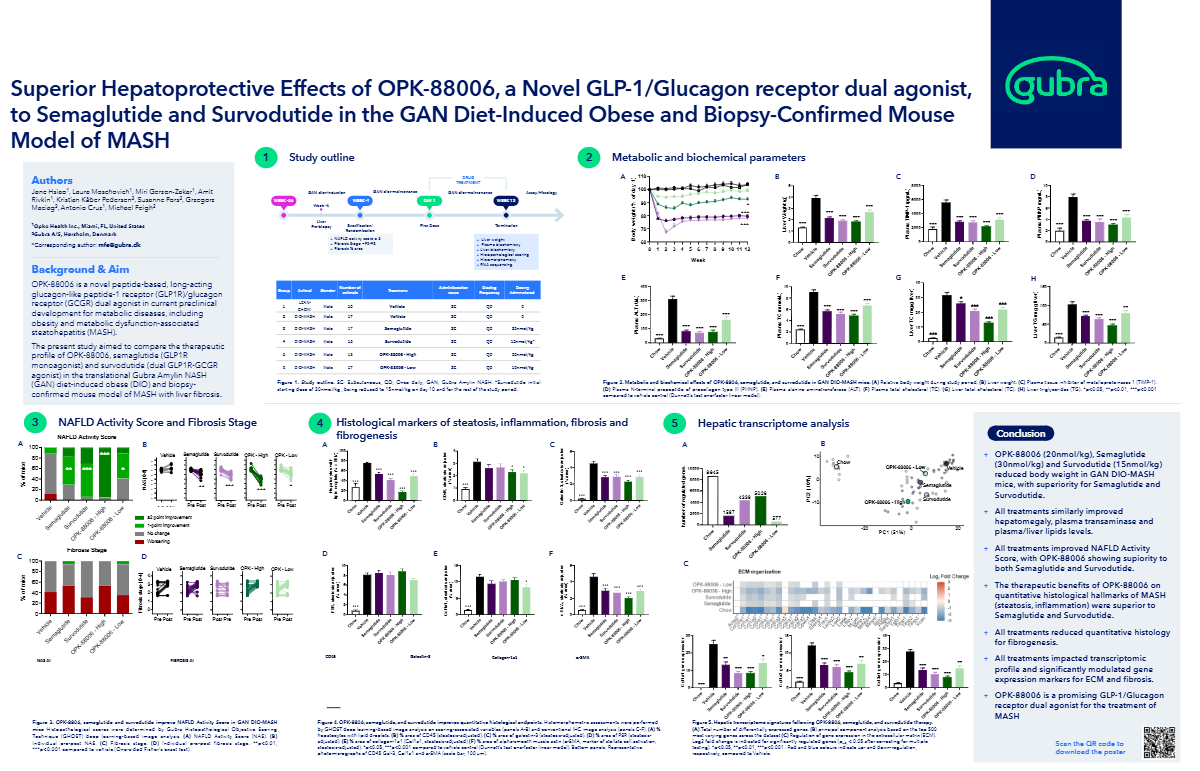
Superior Hepatoprotective Effects of OPK-88006, a Novel GLP-1/Glucagon receptor dual agonist, to Semaglutide and Survodutide in the GAN Diet-Induced Obese and Biopsy-Confirmed Mouse Model of MASH
Background & aim: OPK-88006 is a novel peptide-based, long-acting glucagon-like peptide-1 receptor (GLP1R)/glucagon receptor (GCGR) dual agonist in current preclinical development for metabolic diseases, including obesity and metabolic dysfunction-associated steatohepatitis (MASH). The present study aimed to compare the therapeutic profile…
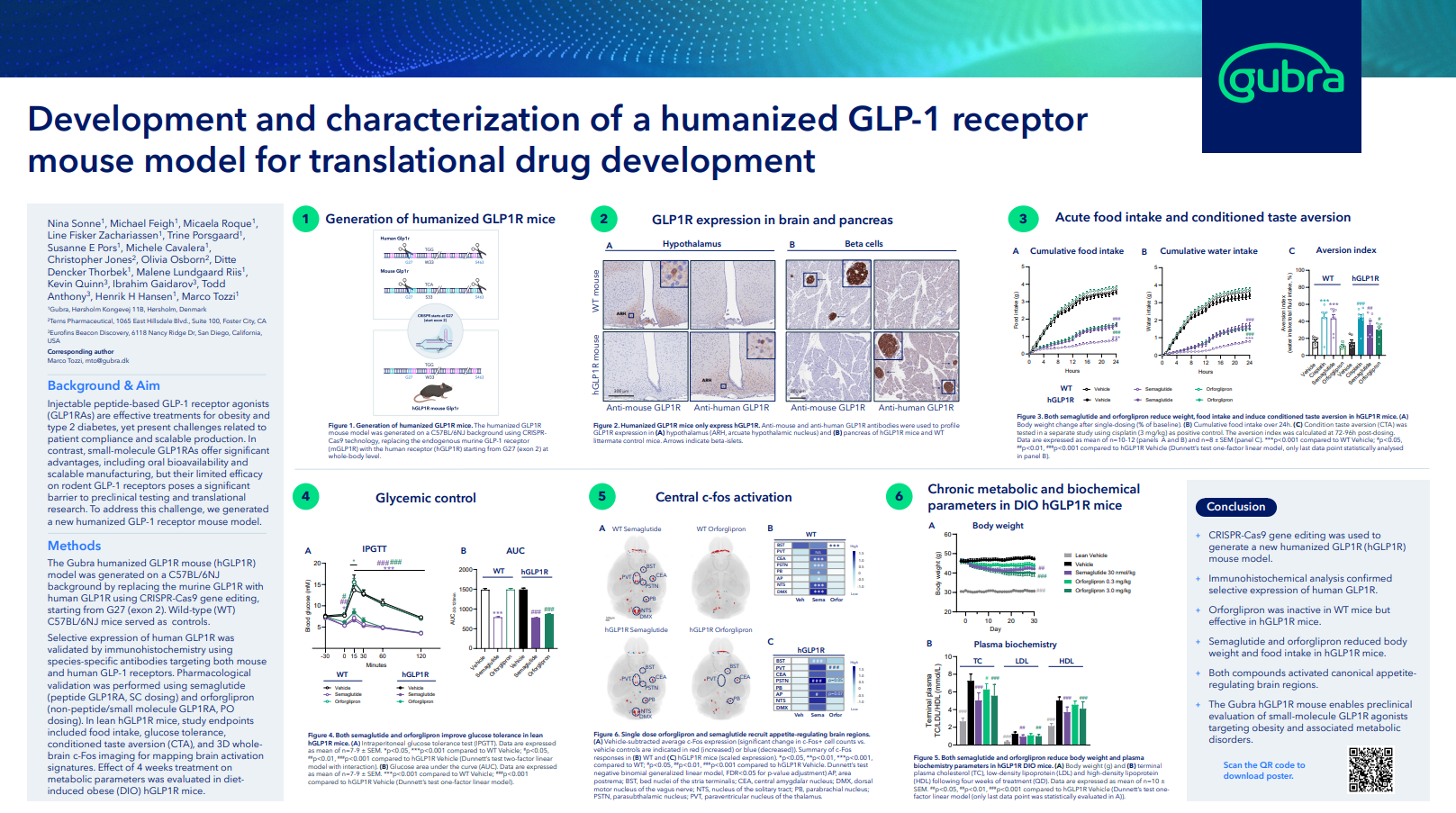
Development and characterization of a humanized GLP-1 receptor mouse model for translational drug development
Background & aim: Injectable peptide-based GLP-1 receptor agonists (GLP1RAs) are effective treatments for obesity and type 2 diabetes, yet present challenges related to patient compliance and scalable production. In contrast, small-molecule GLP1RAs offer significant advantages, including oral bioavailability and scalable…
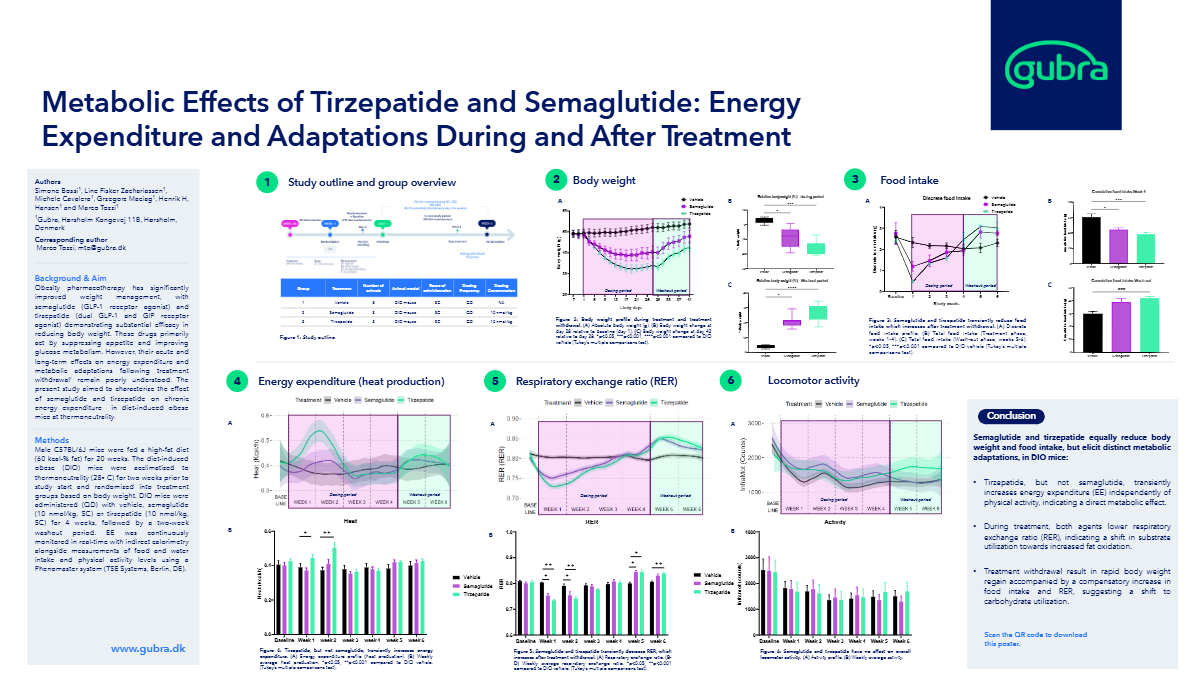
Metabolic Effects of Tirzepatide and Semaglutide: Energy Expenditure and Adaptations During and After Treatment
Background & aim: Obesity pharmacotherapy has significantly improved weight management, with semaglutide (GLP-1 receptor agonist) and tirzepatide (dual GLP-1 and GIP receptor agonist) demonstrating substantial efficacy in reducing body weight. These drugs primarily act by suppressing appetite and improving glucose…
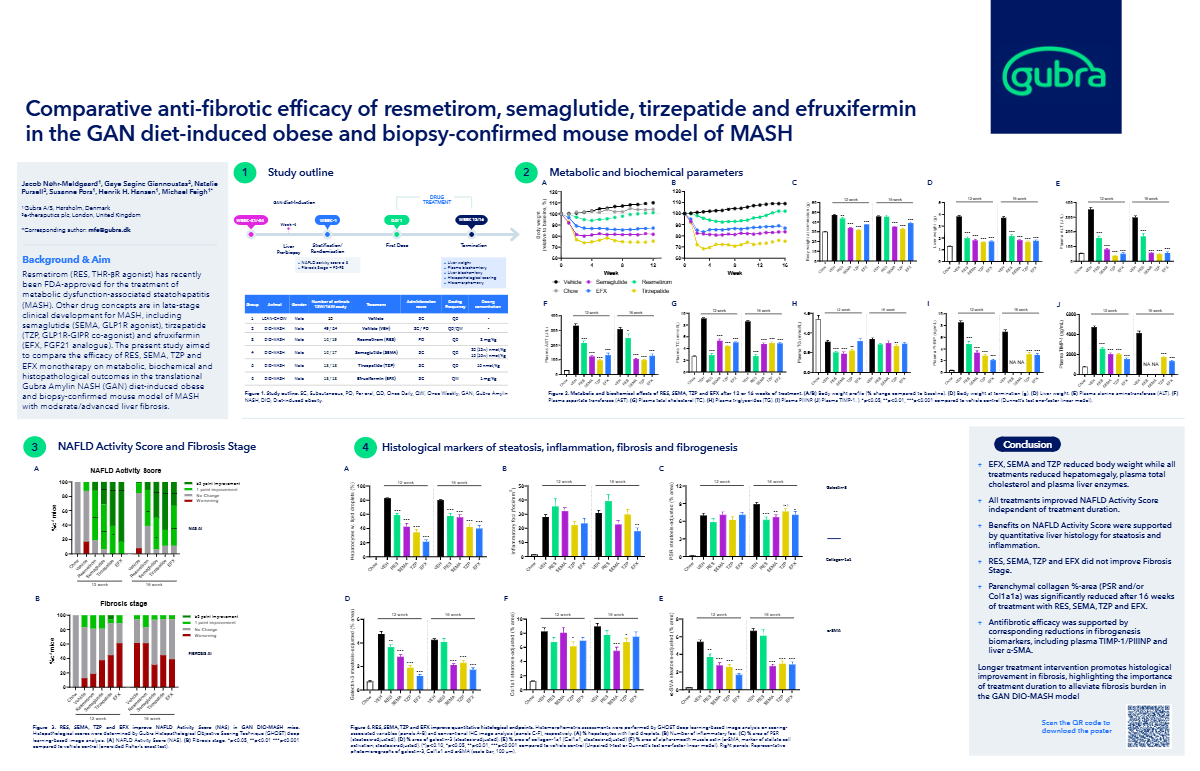
Comparative anti-fibrotic efficacy of resmetirom, semaglutide, tirzepatide and efruxifermin in the GAN diet-induced obese and biopsy-confirmed mouse model of MASH
Background & aim: Resmetirom (RES, THR-βR agonist) has recently been FDA-approved for the treatment of metabolic dysfunction-associated steatohepatitis (MASH). Other drug concepts are in late-stage clinical development for MASH, including semaglutide (SEMA, GLP1R agonist), tirzepatide (TZP, GLP1R-GIPR co-agonist) and efruxifermin…
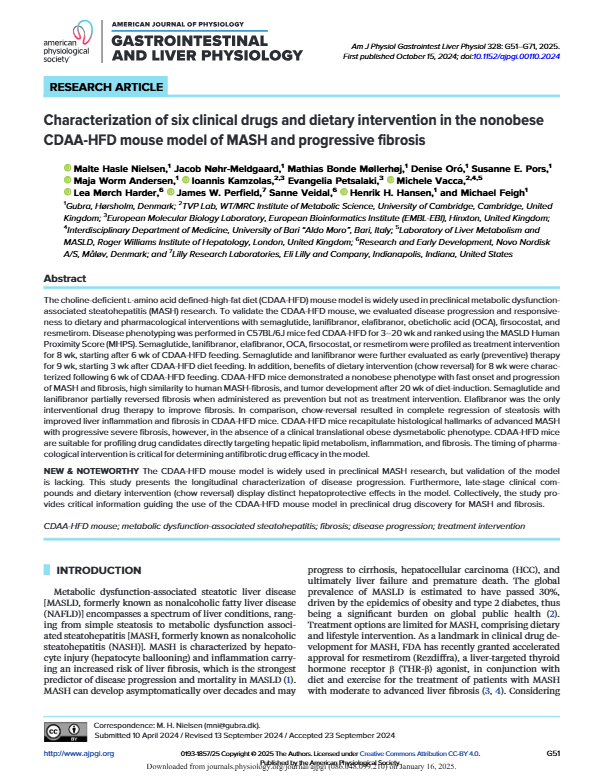

Reproducible efficacy and clinical translatability of longer-term semaglutide treatment in the GAN diet-induced obese and biopsy-confirmed mouse model of MASH
Background & aim: The glucagon-like peptide-1 (GLP-1) analogue semaglutide has been reported to promote resolution of MASH and improve fibrosis stage in a recent clinical phase 3 trial (ESSENCE, Sanyal et al., NEJM; 2025). The present study aimed to evaluate…