Discovery and Development Programs
R&D Pipeline
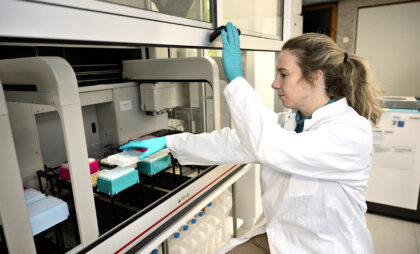
Gubra’s robust R&D pipeline is centered on the discovery and development of peptide-based therapeutics. Fueled by our proprietary StreaMLine platform, we are advancing a growing portfolio across diverse therapeutic areas, including including metabolic, endocrine, and rare disorders. Our approach is rooted in deep peptide expertise and supported by a broad platform of validated and translational in vivo models.
Leading in peptides
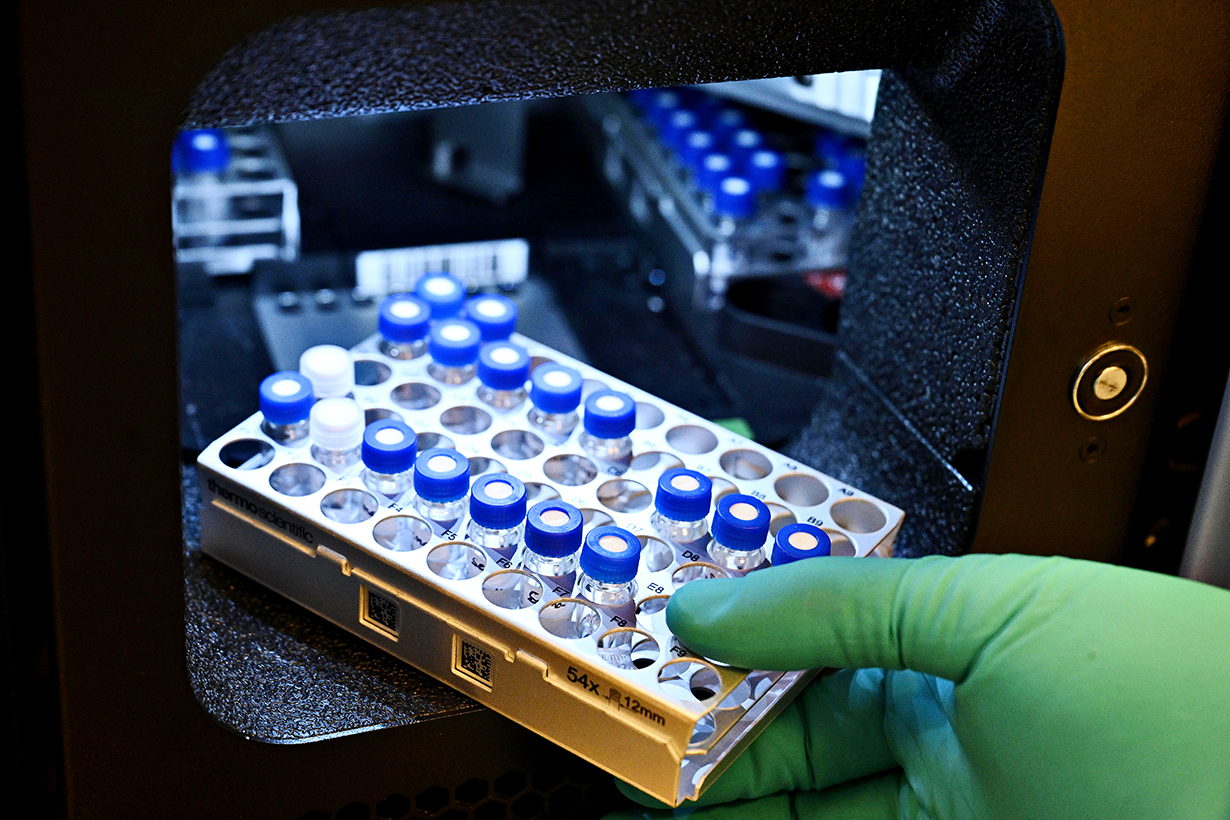
- AI, machine learning, and high-throughput screening to rapidly transform peptide hits into optimized, IP-protected development candidates
- Expertise across metabolic, fibrotic, inflammatory, CNS, respiratory, and women’s health
- Deep scientific knowledge combined with translational in vivo models, ultimately building confidence early in clinical development.
Consult with Louise S. Dalbøge
Chief Science Officer
Choose the right, trustworthy discovery partner.
Balanced portfolio of internal & partnered programs
Gubra’s R&D Pipeline
(urocortin-2 analog)
Background
With current weight loss treatments, 20–40% of body weight reduction comes from unwanted loss of lean mass (muscles, bones, internal organs). Gubra’s UCN2 program is developed for high quality weight loss. In preclinical models UCN2 prevented incretin induced lean mass loos while enhancing fat mass reduction.
Internal
Compound
Urocortin-2 analogue and a potent and highly selective Corticotropin-releasing hormone receptor 2 (CRHR2) agonist that has been designed for weekly dosing.
Background
Injectable peptide-based GLP-1 receptor (GLP1R) agonists have shown remarkable therapeutic success in the treatment of type2 diabetes and obesity, as a monotherapy or in combinations.
Internal
Compound
Undisclosed
Background
Despite significant advancements with approved anti-obesity medications, a substantial medical need persists. Current therapies, while effective for many, often fall short in delivering sustained, long-term and muscle preserving weight loss.
Internal
Compound
Undisclosed
Background
Undisclosed
Internal
Compound
Undisclosed
(amylin analog)
Background
AbbVie and Gubra announced a license agreement to develop an amylin analog for the treatment of obesity. The agreement enables the incorporation of GUB014295, an amylin analogue discovered and developed by Gubra, into AbbVie's global infrastructure (ABBV-295). Amylin is a naturally occurring hormone secreted by pancreatic beta cells that plays a crucial role in energy balance and glucose homeostasis. As a satiety signal, it activates pathways in the brain to suppress appetite and reduce food intake.
Partner
Compound
A long-acting amylin analog.
Clinical
The Phase 1 clinical trial is a two-part, single center, double-blind (within cohorts), randomized, placebo-controlled, single (Part 1) and multiple (Part 2) ascending subcutaneous dose study of GUB014295. Part 1 has been completed; Part 2 is ongoing. More information on this trial can be found at https://www.clinicaltrials.gov/ (NCT: 06144684).
(NPY2R agonist)
Background
BI 1820237, which is fully outlicensed to Boehringer Ingelheim, is a long-acting neuropeptide Y receptor type 2 (NPY2R) agonist. In October 2024, Boehringer Ingelheim discontinued its development for obesity. Potential opportunities outside the obesity indication are now being explored by Boehringer Ingelheim.
Partner
Compound
Undisclosed
(triple GLP-1/GIP/NPY2 agonist)
Background
BI 3034701 is an investigational, potential first in class triple GLP 1, GIP and NPY2 receptor agonist peptide being developed for the treatment of obesity and related metabolic diseases, based on Gubra discovered technology.
Partner
Compound
A long-acting triple agonist peptide with a potential to become a next-generation and first-in-class obesity treatment.
Clinical
BI 3034701 has completed a Phase 1, first in human, randomized, placebo controlled trial assessing safety, tolerability, and pharmacokinetics in healthy participants and individuals with overweight or obesity. Following completion of Phase 1, Boehringer Ingelheim plans to initiate Phase 2 clinical development in mid 2026 to further evaluate the compound’s potential. Under the collaboration and license agreement, Boehringer Ingelheim is responsible for global clinical development and commercialization.
Background
Further building on their history of successful partnership, Gubra and Boehringer Ingelheim have entered a collaboration taking a new approach to discover novel peptides to deliver innovative treatments with the aim of improving health outcomes for people living with obesity.
Partner
Compound
Undisclosed
(GLP-1R antagonist)
Background
AMX0318, a novel, long-acting GLP-1 receptor antagonist, was selected as a development candidate for post-bariatric hypoglycemia (PBH) and other rare diseases by Amylyx and was identified through a research collaboration with Gubra. AMX0318 has completed extensive preclinical evaluation, including stability, solubility, potency, in vivo pharmacokinetics and pharmacodynamics, and in vivo tolerability studies. Amylyx expects the program to advance into IND-enabling studies later this year with an IND targeted for 2027, pending successful completion of IND enabling studies.
Partner
Compound
A novel, long-acting GLP-1 receptor antagonist
Background
Undisclosed
Partner
Compound
Undisclosed
Background
Gubra and Camurus announced a collaboration and license agreement to develop a long-acting therapeutic option for treatment of hypoparathyroidism. This research and development program will combine Gubra’s parathyroid hormone (PTH) analogue, developed using its proprietary streaMLine peptide discovery platform, with Camurus’ FluidCrystal® technology to enable extended, patient-friendly dosing.
Partner
Compound
A long-acting PTH analogue.
“
Our scientific expertise, combined with AI-driven platforms, is the foundation of our strong pipeline.

Related pages
For further information
Contact us
Gubra
Hørsholm Kongevej 11B
2970 Hørsholm
Denmark
+45 3152 2650