


Survodutide acts through circumventricular organs in the brain and activates neuronal regions associated with appetite regulation
Abstract: Survodutide is a novel GCG/GLP-1 receptor (GCGR/GLP-1R) dual agonist in clinical development for people with obesity and people with metabolic dysfunction-associated steatohepatitis (MASH). Preclinically, survodutide demonstrated body weight lowering efficacy through decreased energy intake and increased energy expenditure. Here,…

Generation and characterisation of a humanised GLP-1 receptor mouse model for translational drug development
Background: Injectable peptide-based glucagon-like peptide-1 receptor (GLP1R) agonists (GLP1RAs) are effective treatments for obesity and diabetes but are limited by patient compliance and scalability challenges. In contrast, non-peptide small-molecule GLP1RAs offer the advantage of oral delivery but are relatively inactive…

GUB-UCN2 as Monotherapy and in Combination with Semaglutide Improves Body Composition and Metabolic Outcomes in Aged Diet-Induced Obese Rats
Background & aim: Glucagon-like peptide-1 receptor agonists, such as semaglutide, induce substantial weight loss but may adversely affect muscle mass. This is of particular concern in older adults with obesity, who are vulnerable to sarcopenia. Accordingly, obesity treatments should be…

Elucidating the potential benefit of pump-delivered subcutaneous GLP-1R agonist: an exploratory study in the diet-induced obese mouse
Background & aim: Subcutaneous pump delivery of the GLP1-receptor-agonist exenatide reduced body weight and improved glycemia in the DIO mouse. Basal-bolus administration conferred advantage over basal alone. This mode of incretin-based therapy offers an alternative to conventional intermittent dosing and…

High-Throughput 3D Imaging and Quantification of Rodent Hindlimb Muscles Using Light Sheet Fluorescence Microscopy
Background & aim: Accurate assessment of muscle mass remains a major challenge in preclinical models of sarcopenia, obesity, and drug-induced atrophy. Traditional readouts such as lean mass from body composition scans lack spatial resolution and anatomical specificity, especially in conditions…

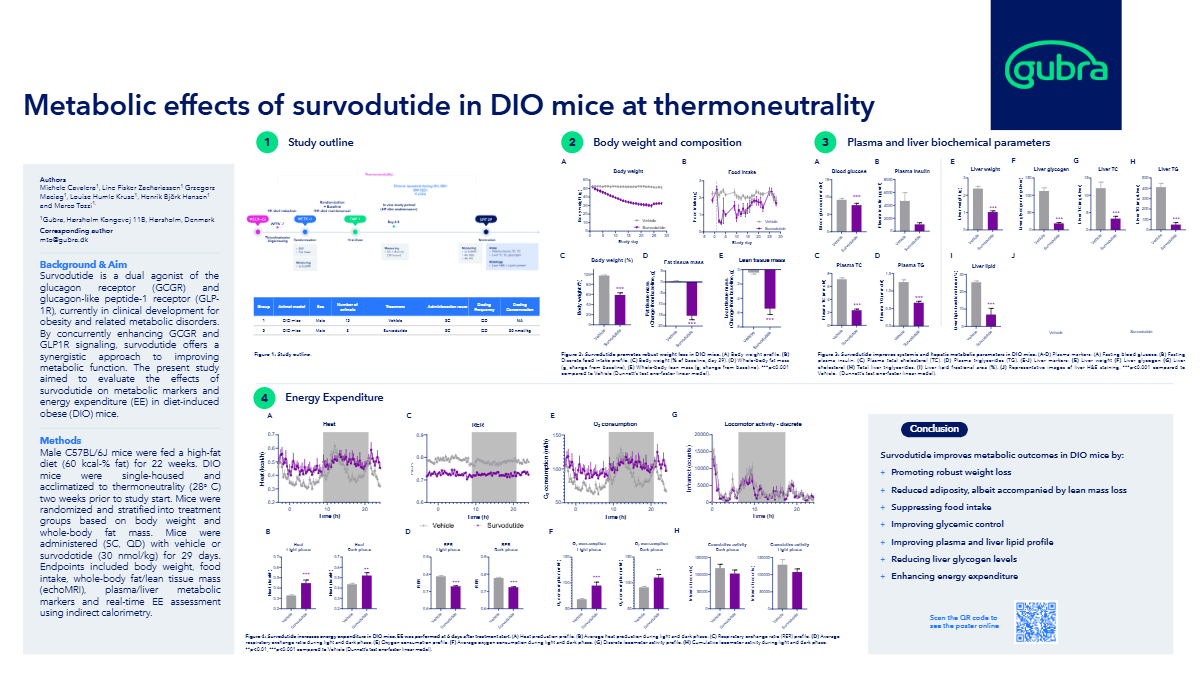
Metabolic effects of survodutide in DIO mice at thermoneutrality
Background & aim: Survodutide is a dual agonist of the glucagon receptor (GCGR) and glucagon-like peptide-1 receptor (GLP-1R), currently in clinical development for obesity and related metabolic disorders. By concurrently enhancing GCGR and GLP1R signaling, survodutide offers a synergistic approach…
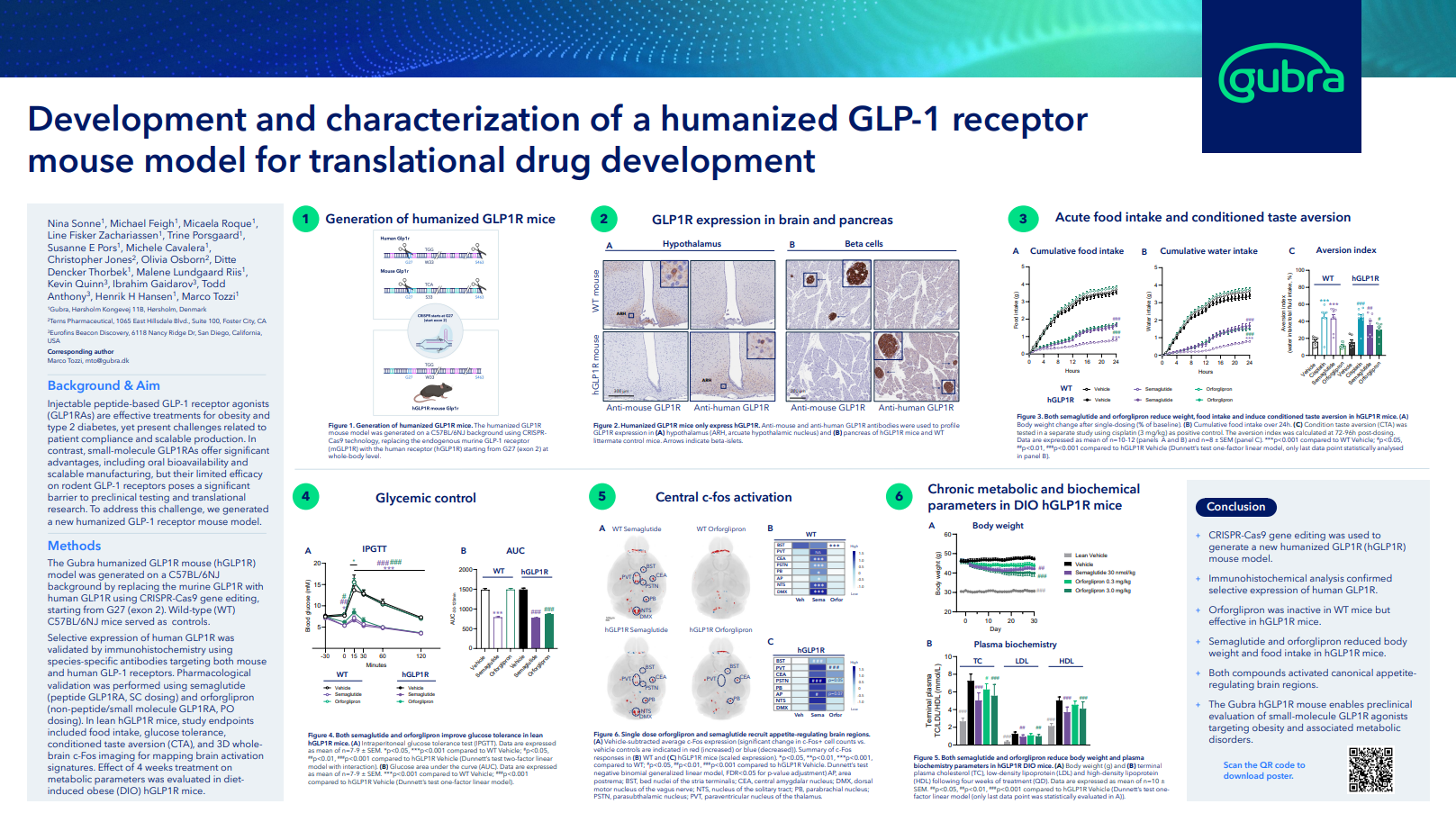
Development and characterization of a humanized GLP-1 receptor mouse model for translational drug development
Background & aim: Injectable peptide-based GLP-1 receptor agonists (GLP1RAs) are effective treatments for obesity and type 2 diabetes, yet present challenges related to patient compliance and scalable production. In contrast, small-molecule GLP1RAs offer significant advantages, including oral bioavailability and scalable…
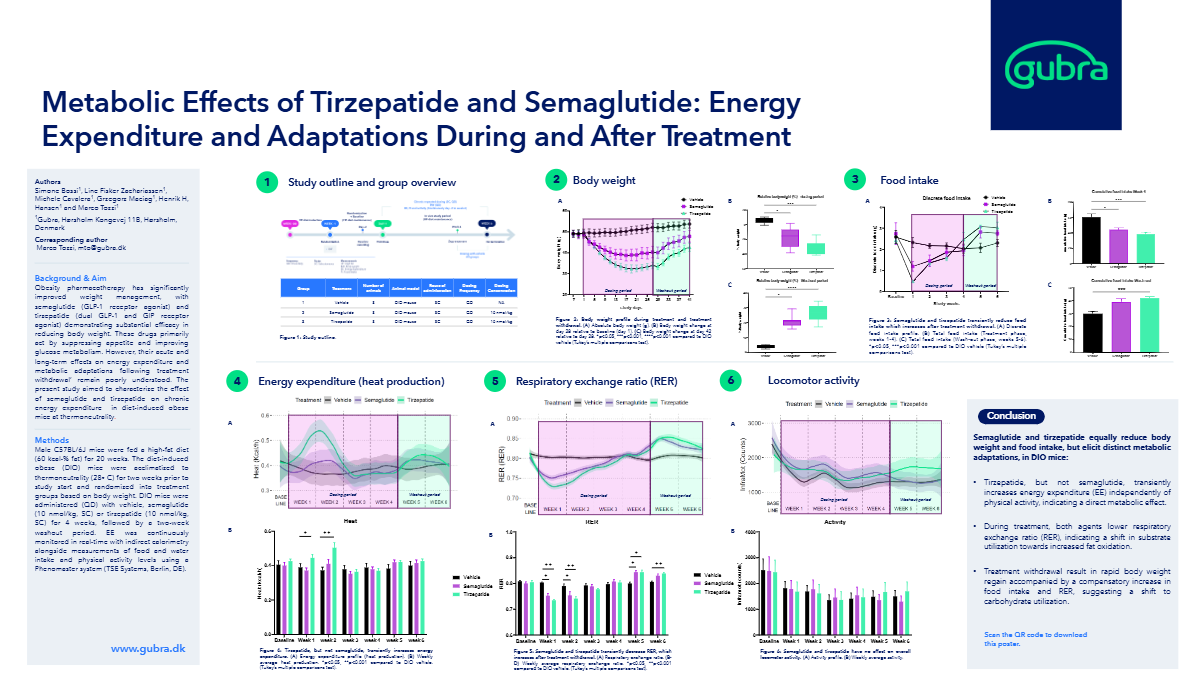
Metabolic Effects of Tirzepatide and Semaglutide: Energy Expenditure and Adaptations During and After Treatment
Background & aim: Obesity pharmacotherapy has significantly improved weight management, with semaglutide (GLP-1 receptor agonist) and tirzepatide (dual GLP-1 and GIP receptor agonist) demonstrating substantial efficacy in reducing body weight. These drugs primarily act by suppressing appetite and improving glucose…