


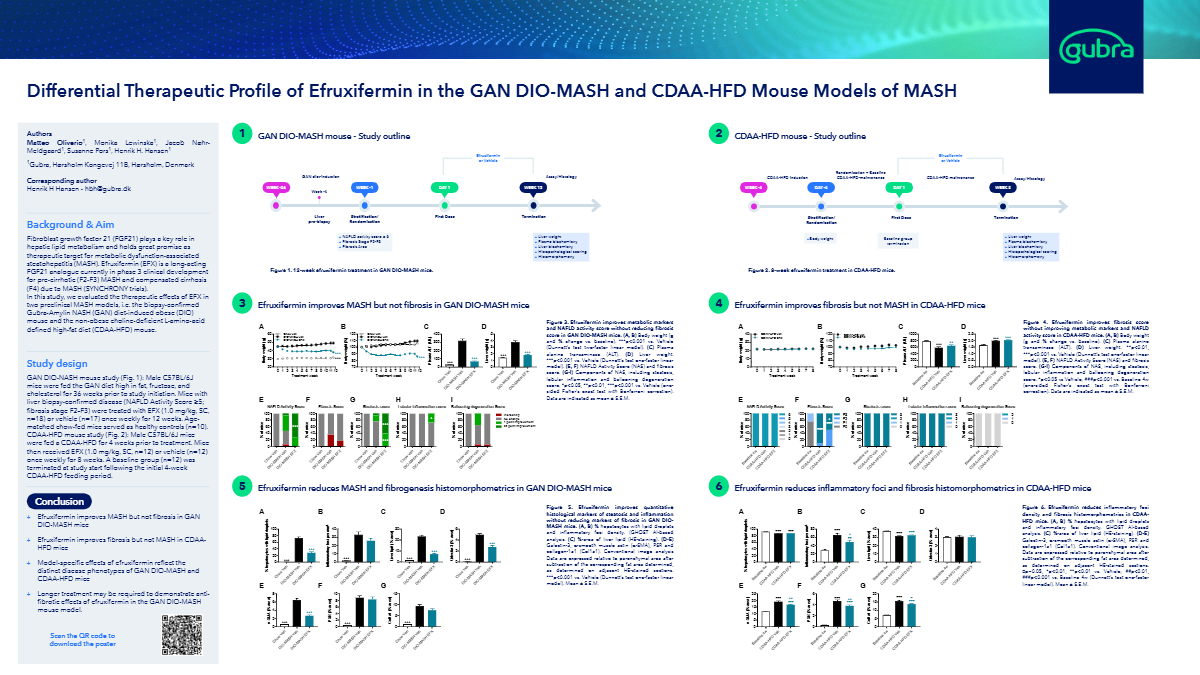
Differential Therapeutic Profile of Efruxifermin in the GAN DIO-MASH and CDAA-HFD Mouse Models of MASH
Background & aim: Fibroblast growth factor 21 (FGF21) plays a key role in hepatic lipid metabolism and holds great promise as therapeutic target for metabolic dysfunction-associated steatohepatitis (MASH). Efruxifermin (EFX) is a long-acting FGF21 analogue currently in phase 3 clinical…

A Multimodal Rat Brain Atlas and Whole-Brain Imaging Pipeline for Mapping Satiety Pathways and Anti-Obesity Drug Effects
Background & aim: Central regulation of appetite and satiety engages neuronal populations distributed across the brain. The identification of novel drug targets, development of anti-obesity therapeutics, and validation of their mode of action benefit from whole-brain imaging. Light-sheet fluorescence…

Nintedanib lacks efficacy in a spirometry-confirmed and bleomycin-induced mouse model of idiopathic pulmonary fibrosis
Abstract: Nintedanib, a multitargeted tyrosine kinase inhibitor, is approved for idiopathic pulmonary fibrosis (IPF) for its ability to slow lung function decline. This study systematically evaluated the effects of nintedanib across three independent treatment intervention studies in the single-dose bleomycin…

Survodutide acts through circumventricular organs in the brain and activates neuronal regions associated with appetite regulation
Abstract: Survodutide is a novel GCG/GLP-1 receptor (GCGR/GLP-1R) dual agonist in clinical development for people with obesity and people with metabolic dysfunction-associated steatohepatitis (MASH). Preclinically, survodutide demonstrated body weight lowering efficacy through decreased energy intake and increased energy expenditure. Here,…

GUB-UCN2 as Monotherapy and in Combination with Semaglutide Improves Body Composition and Metabolic Outcomes in Aged Diet-Induced Obese Rats
Background & aim: Glucagon-like peptide-1 receptor agonists, such as semaglutide, induce substantial weight loss but may adversely affect muscle mass. This is of particular concern in older adults with obesity, who are vulnerable to sarcopenia. Accordingly, obesity treatments should be…

Elucidating the potential benefit of pump-delivered subcutaneous GLP-1R agonist: an exploratory study in the diet-induced obese mouse
Background & aim: Subcutaneous pump delivery of the GLP1-receptor-agonist exenatide reduced body weight and improved glycemia in the DIO mouse. Basal-bolus administration conferred advantage over basal alone. This mode of incretin-based therapy offers an alternative to conventional intermittent dosing and…

High-Throughput 3D Imaging and Quantification of Rodent Hindlimb Muscles Using Light Sheet Fluorescence Microscopy
Background & aim: Accurate assessment of muscle mass remains a major challenge in preclinical models of sarcopenia, obesity, and drug-induced atrophy. Traditional readouts such as lean mass from body composition scans lack spatial resolution and anatomical specificity, especially in conditions…

Nephroprotective effects of enalapril in the anti-GBM mouse model of glomerulonephritis
Background & aim: Translational rodent models of glomerulosclerosis are essential in drug discovery for chronic kidney disease (CKD). The anti-glomerular basement membrane (anti-GBM) model in mice represents a clinically relevant model as it exhibits key features of albuminuria and glomerulosclerosis.…