
Preclinical models of chronic kidney disease
Unilateral Ureteral Obstruction (UUO) Mouse Model of Kidney Fibrosis
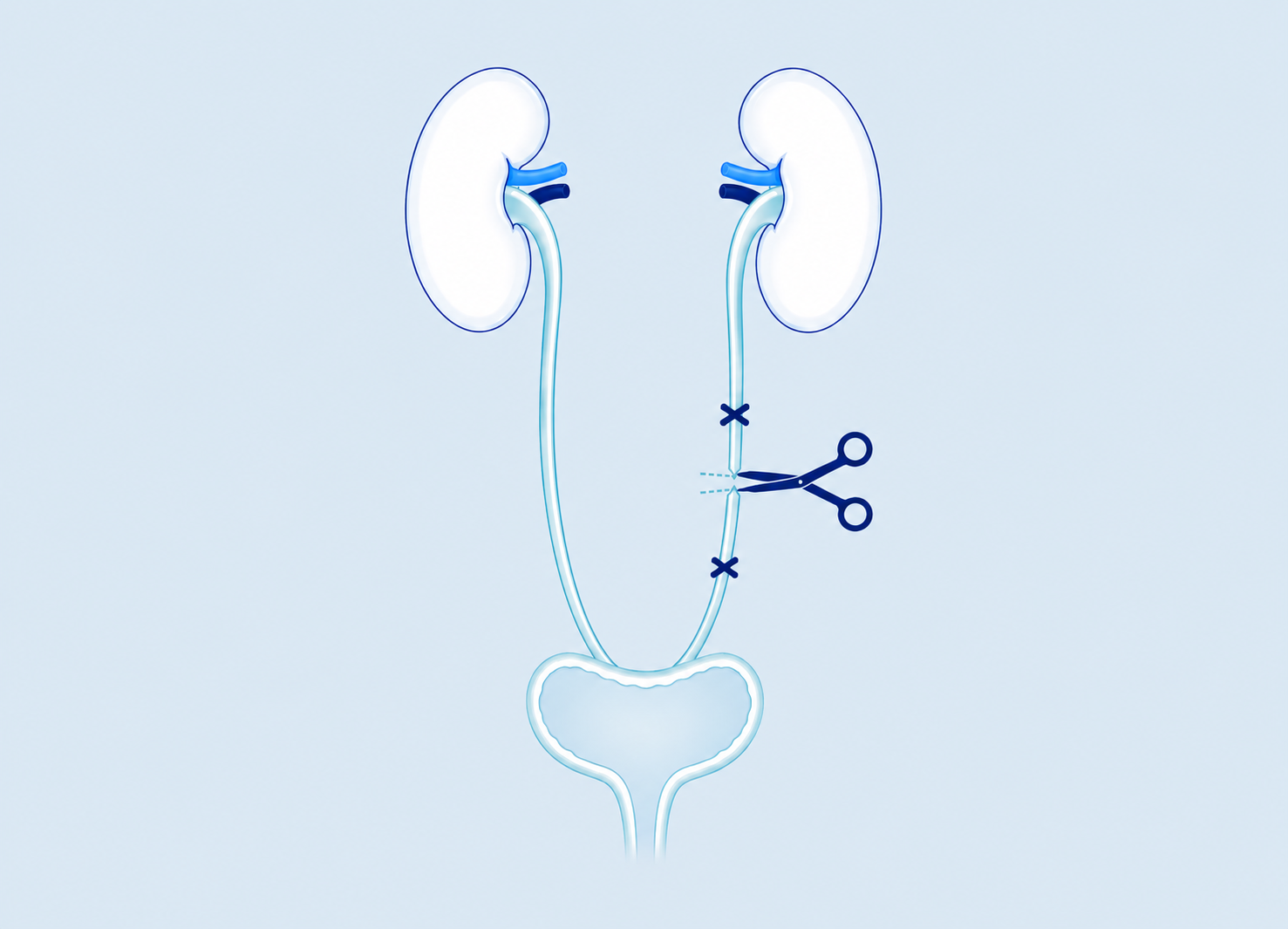
The unilateral ureteral obstruction (UUO) mouse model is a widely used preclinical renal model for studying kidney inflammation and and inflammation. It enables rapid and reproducible induction of kidney injury and fibrotic remodeling, making it suitable for evaluating anti-fibrotic therapies. Key endpoints include collagen deposition (hydroxyproline), fibrosis markers (Col1a1, α-SMA), tubular injury (KIM-1), and immune cell infiltration (F4/80).

Consult with Michael Christensen
Head of Scientific Sales
Explore collaboration opportunities using the UUO mouse model
UUO Model Overview
Unlike systemic chronic kidney disease models, the UUO models provides a controlled environment for investigating inflammation, tubular injury and fibrosis. This makes the model particularly valuable for short-term efficacy studies and mechanistic research, especially when evaluating anti-fibrotic therapies.

Key Applications of the UUO Mouse Model
The UUO mouse model is widely used in preclinical kidney research due to its ability to rapidly induce fibrosis and inflammation, enabling evaluation of therapeutic interventions targeting CKD progression and renal injury mechanisms.
- Kidney fibrosis model for preclinical drug testing
- Chronic kidney disease (CKD) model
- Renal inflammation and injury studies
- Screening of nephroprotective compounds

Key Advantages of the UUO Mouse Model
Compared to other kidney disease models, the UUO mouse model provides a rapid, robust, and highly reproducible platform for providing rapid and reproducible outcomes in preclinical studies.
- Rapid and reproducible induction of fibrosis
- Strong inflammatory and fibrotic response
- Suitable for short-term efficacy studies
- Well-established kidney disease model
Model Translational Relevance
Renal fibrosis is a central driver of chronic kidney disease progression and is associated with clinical outcomes. The UUO mouse model reproduces key pathological features, including immune cell infiltration, tubular injury and extracellular matrix accumulation. This enables translational evaluation of therapies targeting inflammatory and fibrotic pathways relevant to human kidney disease.

UUO Mouse Model Background
The UUO model is induced by unilateral ureteral obstruction surgery, resulting in rapid and reproducible development of kidney fibrosis and inflammation. Within days, the model exhibits key pathological features of chronic kidney disease, including extracellular matrix accumulation, tubular injury, and immune cell infiltration, making it highly suitable for short-term mechanistic and efficacy studies.

UUO Mouse Model Validation
The UUO mouse model demonstrates robust and quantifiable increases in fibrosis and injury markers, including Col1a1, Col3a1, α-SMA, KIM-1, and macrophage infiltration (F4/80), alongside elevated hydroxyproline levels reflecting collagen deposition.
In therapeutic studies, treatment with an ALK5 inhibitor resulted in dose-dependent reductions in kidney hydroxyproline and fibrosis markers, confirming the model’s sensitivity for detecting anti-fibrotic and nephroprotective effects.
Study Design & Protocol
The UUO mouse model study is based on unilateral ureteral obstruction surgery followed by short-term compound administration to evaluate renal fibrosis, inflammation, and tubular injury under controlled conditions. The model enables rapid assessment of anti-fibrotic and nephroprotective effects within a defined experimental timeframe.
Study groups and dosing regimen in the UUO mouse model
The study design includes sham-operated and UUO groups treated with vehicle or an ALK5 inhibitor administered orally twice daily. UUO mice receive increasing doses of the ALK5 inhibitor (3, 10, and 30 mg/kg) to evaluate dose-dependent effects on kidney fibrosis, inflammation, and tubular injury.
This group setup enables direct comparison between sham and disease conditions, as well as assessment of therapeutic efficacy across multiple dose levels.
| Group | Animal | Gender | Number of animals |
Treatment | Administration route |
Dosing Frequency |
Dosing volume |
Dosing concentration |
|---|---|---|---|---|---|---|---|---|
| 1 | Sham | Male | 10 | Vehicle | PO | BID | 5 | - |
| 2 | UUO | Male | 10 | Vehicle | PO | BID | 5 | - |
| 3 | UUO | Male | 10 | ALK5i | PO | BID | 5 | 3 mg/kg |
| 4 | UUO | Male | 10 | ALK5i | PO | BID | 5 | 10 mg/kg |
| 5 | UUO | Male | 10 | ALK5i | PO | BID | 5 | 30 mg/kg |
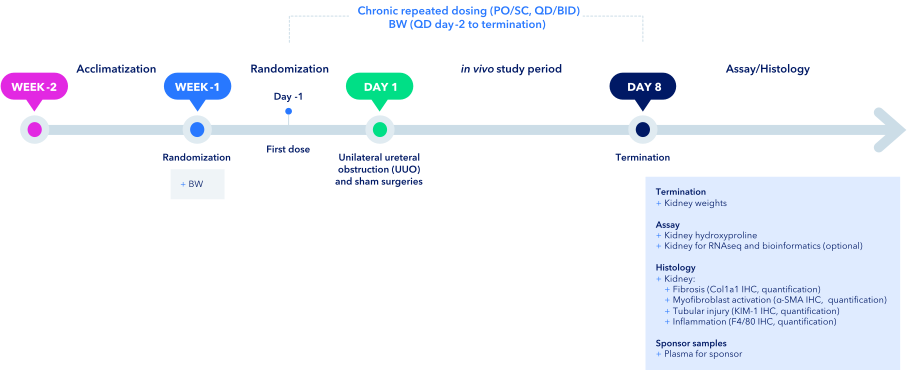
Standard study outline of the UUO model
A typical UUO study includes acclimatization, randomization, surgical induction of kidney injury, and short-term treatment with test compounds. Animals are monitored throughout the study, and endpoints are assessed at termination to quantify fibrosis, inflammation, and renal injury.
Endpoints & Readouts
The UUO mouse model enables quantitative assessment of kidney fibrosis, inflammation, tubular injury, and biochemical changes using well-established histological, molecular, and biochemical readouts, including collagen deposition, fibrosis markers, and inflammatory and injury-related endpoints.
ALK5i dose-dependently reduces kidney fibrosis
Treatment with an ALK5 inhibitor resulted in dose-dependent reductions in fibrosis markers Col1a1 and Col3a1, indicating attenuation of kidney fibrosis in UUO mice.
Figure 1. ALK5 inhibitor reduces kidney fibrosis markers in UUO mice.
Representative staining shows increased Col1a1 and Col3a1 expression in UUO vehicle-treated mice compared to sham controls. Treatment with an ALK5 inhibitor reduces fibrosis marker expression in a dose-dependent manner, with quantitative analysis confirming significant reductions in both Col1a1 and Col3a1.
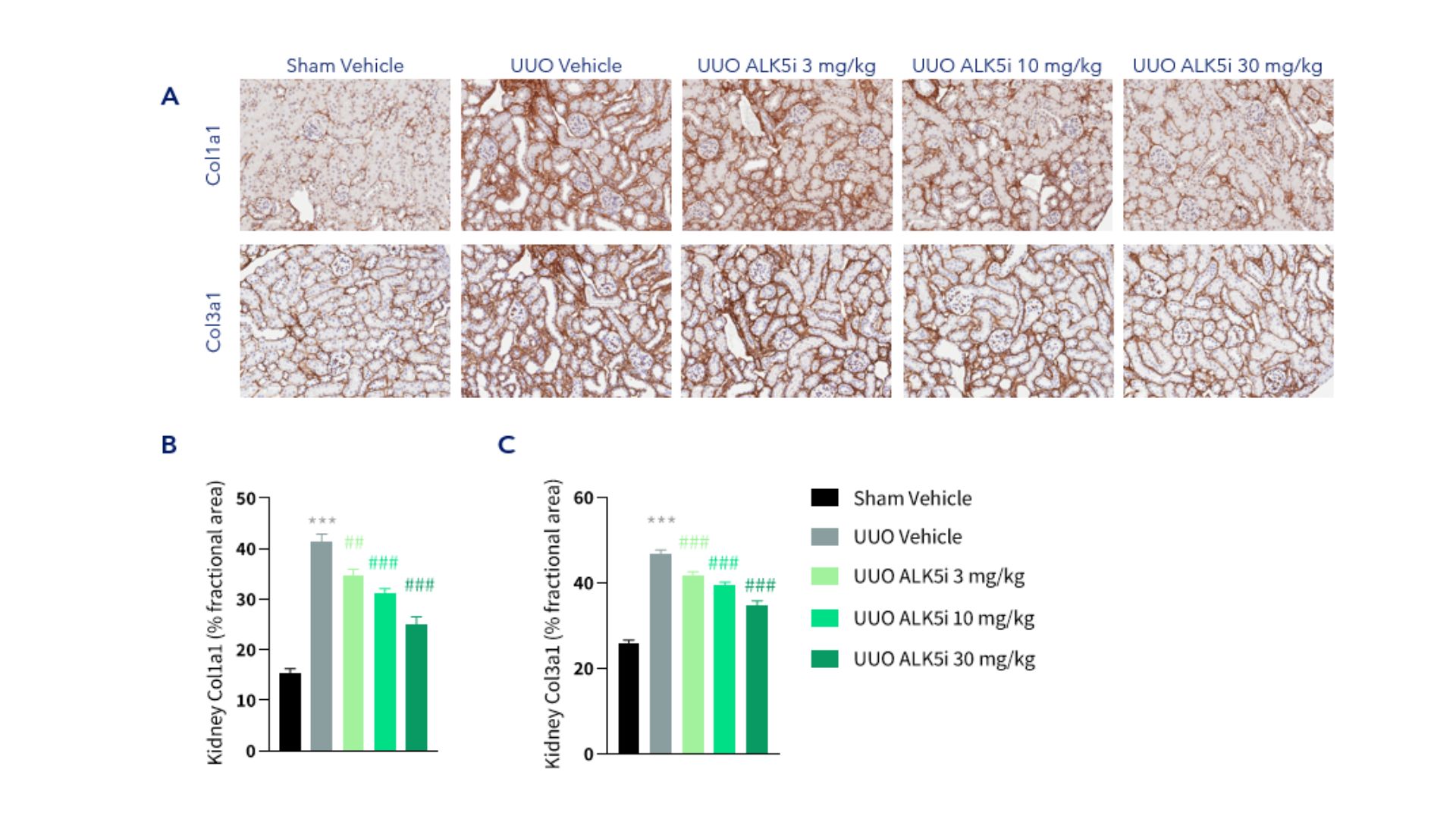
These results demonstrate that the UUO model provides sensitive and quantifiable readouts of kidney fibrosis for evaluating anti-fibrotic therapies.
ALK5 inhibitor reduces kidney hydroxyproline and fibrosis in UUO mice
Treatment with an ALK5 inhibitor resulted in reduced kidney hydroxyproline levels, reflecting decreased collagen deposition and attenuation of fibrosis in UUO mice.
Figure 2. ALK5 inhibitor reduces kidney hydroxyproline in UUO mice.
UUO vehicle-treated mice show increased kidney hydroxyproline compared to sham controls, indicating fibrosis. Treatment with an ALK5 inhibitor reduces hydroxyproline levels, demonstrating a measurable anti-fibrotic response in this model.
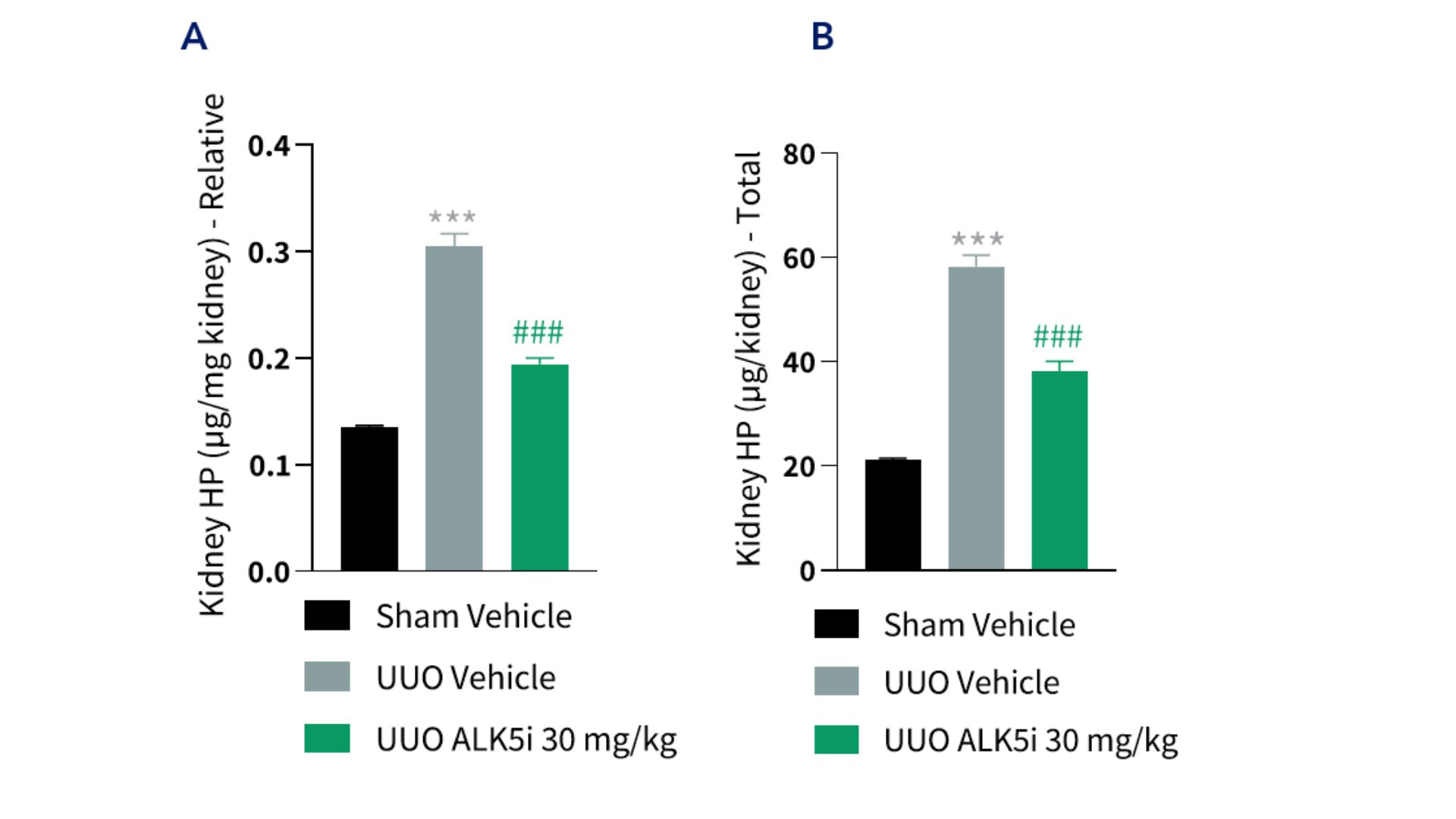
These results demonstrate that the UUO model provides sensitive and quantifiable readouts for evaluating anti-fibrotic therapies.
ALK5 inhibitor reduces kidney inflammation in UUO mice
Treatment with an ALK5 inhibitor reduced F4/80-positive cell infiltration, indicating decreased renal inflammation in UUO mice.
Figure 3. ALK5 inhibitor reduces kidney inflammation in UUO mice.
Representative F4/80 staining shows increased macrophage infiltration in UUO vehicle-treated mice compared to sham controls. Treatment with an ALK5 inhibitor reduces F4/80-positive staining, with quantitative analysis confirming a significant reduction in inflammatory cell infiltration.

These results demonstrate that the UUO model provides quantifiable readouts of renal inflammation for evaluating anti-inflammatory and anti-fibrotic therapies.
ALK5i reduces tubular injury
Treatment with an ALK5 inhibitor reduced kidney and plasma KIM-1 levels, indicating attenuation of tubular injury in UUO mice.
Figure 4. ALK5 inhibitor reduces tubular injury in UUO mice.
Representative KIM-1 staining shows increased tubular injury in UUO vehicle-treated mice compared to sham controls. Treatment with an ALK5 inhibitor reduces KIM-1 expression in kidney tissue, with quantitative analysis and plasma measurements confirming a significant reduction in tubular injury.
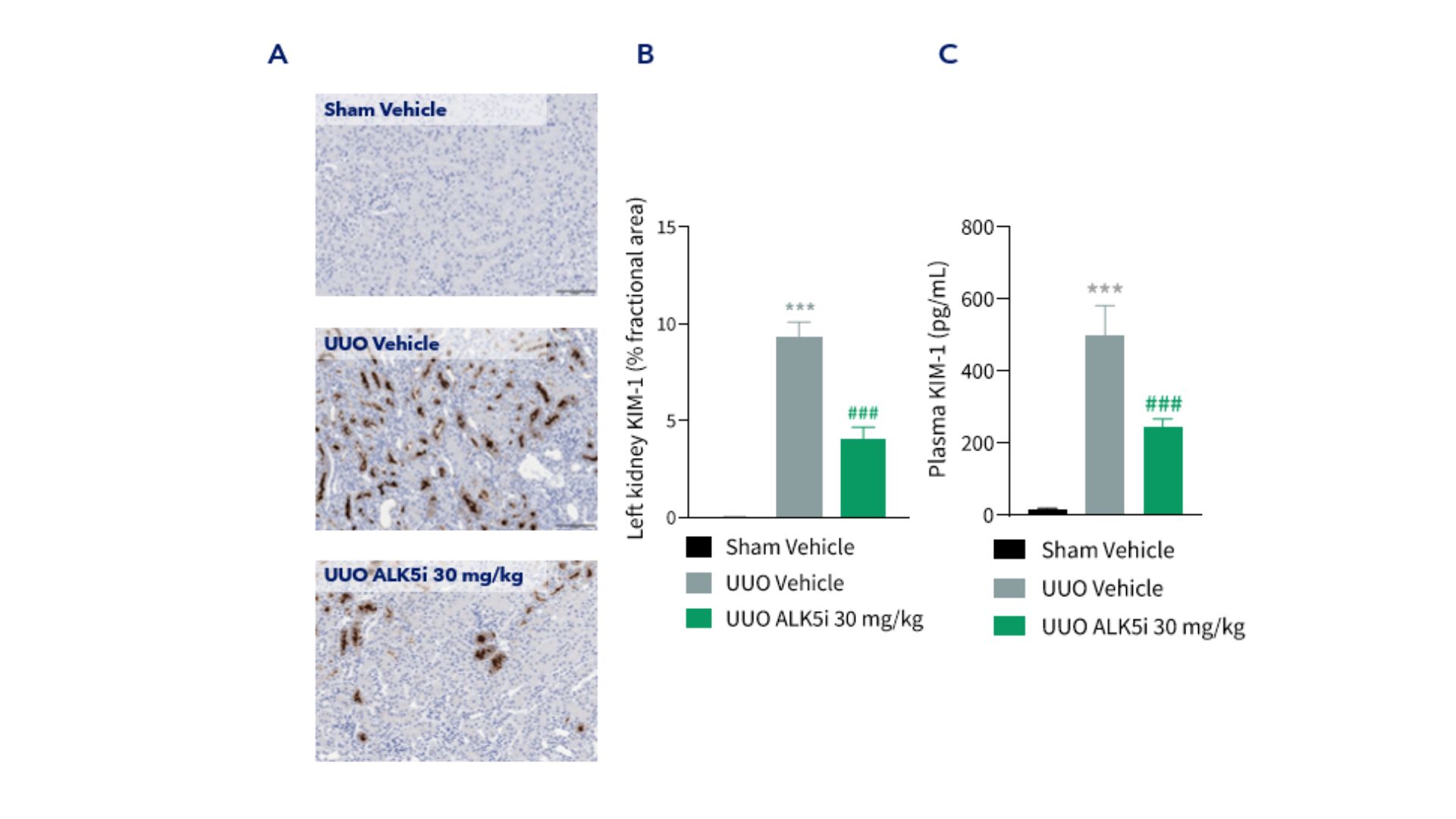
These results demonstrate that the UUO model provides quantifiable readouts of tubular injury for evaluating nephroprotective therapies.
ALK5i reduces myofibroblast activation
Treatment with an ALK5 inhibitor reduced α-SMA expression, indicating decreased myofibroblast activation and attenuation of fibrosis in UUO mice.
Figure 5. ALK5 inhibitor reduces myofibroblast activation in UUO mice.
Representative α-SMA staining shows increased myofibroblast activation in UUO vehicle-treated mice compared to sham controls. Treatment with an ALK5 inhibitor reduces α-SMA expression, with quantitative analysis confirming a significant reduction in myofibroblast activation.

These results demonstrate that the UUO model provides quantifiable readouts of myofibroblast activation for evaluating anti-fibrotic therapies.
FAQ
Frequently asked questions about model performance, applications, and study design.
The UUO mouse model is used to study kidney fibrosis, renal inflammation, and mechanisms of chronic kidney disease progression. It is widely applied in preclinical research to evaluate anti-fibrotic and nephroprotective therapies and to investigate pathways involved in kidney injury.
Fibrosis develops rapidly in the UUO model, with significant extracellular matrix accumulation and inflammatory responses observed within a few days after ureteral obstruction. Robust fibrosis is typically established within 7–10 days, making the model well suited for short-term studies.
The UUO model enables quantitative assessment of fibrosis, inflammation, and tubular injury. Common endpoints include collagen deposition (hydroxyproline), fibrosis markers (Col1a1, Col3a1, α-SMA), tubular injury marker KIM-1, and inflammatory cell infiltration (F4/80), alongside histological and molecular analyses.
Yes, the UUO model is widely used to evaluate anti-fibrotic therapies. It provides sensitive and quantifiable readouts that enable detection of treatment effects, including dose-dependent reductions in fibrosis and inflammation markers.
Yes, the UUO model is particularly well suited for short-term studies due to its rapid and reproducible induction of kidney fibrosis and inflammation. It allows efficient evaluation of therapeutic effects within a defined experimental timeframe.
For further information
Contact us
Gubra
Hørsholm Kongevej 11B
2970 Hørsholm
Denmark
+45 3152 2650