
Preclinical models of chronic kidney disease
Adenine induced CKD Mouse Model of Kidney Fibrosis
A translational mouse model of chronic kidney disease (CKD) that reproduces key features of renal dysfunction, including reduced glomerular filtration rate (GFR), albuminuria, inflammation, and fibrosis. The model supports evaluation of nephroprotective therapies and disease progression in preclinical kidney research.

Consult with Michael Christensen
Head of Scientific Sales
Discuss your CKD study with our scientific experts
ADI Model Overview
The adenine diet-induced (ADI) mouse model is a well-established model of chronic kidney disease that combines functional and histological manifestations of renal injury. The model enables assessment of kidney function, kidney injury, inflammation, and fibrosis, making it suitable for evaluating novel therapeutic approaches in CKD.

Key Applications of the ADI Mouse Model
This model is used to evaluate therapies targeting chronic kidney disease and progressive renal dysfunction.
-
Chronic kidney disease (CKD) research
-
Kidney fibrosis studies
-
Nephroprotective drug development
-
Renal function assessment
-
Evaluation of standard-of-care therapies

Key Advantages of the ADI Mouse Model
The adenine diet-induced model demonstrates both functional and histological manifestations of chronic kidney disease, supporting translational drug development.
-
Demonstrates reduced glomerular filtration rate (GFR)
-
Responsive to standard-of-care treatment (dapagliflozin)
-
Multiple functional and histological endpoints
-
Suitable for efficacy studies in CKD
-
Combines functional and tissue-based kidney readouts
Model Translational Relevance
Most preclinical CKD models do not consistently demonstrate reduced glomerular filtration rate or improvement following standard-of-care treatment. The adenine diet-induced mouse model exhibits both characteristics, supporting translational assessment of therapies targeting kidney disease progression.

ADI Mouse Model Background
The model is induced by administration of an adenine-containing diet, resulting in progressive kidney dysfunction, inflammation, and fibrosis. Disease development is characterized through functional, biochemical, and histological assessments of renal injury.

ADI Mouse Model Validation
Treatment with the SGLT2 inhibitor dapagliflozin improves kidney function and reduces markers of kidney injury in adenine diet-induced mice. Improvements in GFR, albuminuria, plasma biomarkers, inflammation, and fibrosis support the translational relevance of the model.
Study Design & Protocol
The adenine diet-induced (ADI) mouse model uses dietary induction of chronic kidney disease followed by treatment with test compounds. The study enables assessment of kidney function, injury, inflammation, and fibrosis through a combination of functional, biochemical, and histological endpoints.
Study groups and dosing regimen in the ADI mouse model
The study includes healthy control and adenine diet-induced groups treated with vehicle or dapagliflozin. This design enables direct comparison of disease progression and treatment effects on kidney function and renal injury markers.
| Group | Animal | Gender | Number of animals |
Treatment | Administration route |
Dosing Frequency |
Dosing volume |
Dosing concentration |
|---|---|---|---|---|---|---|---|---|
| 1 | Control diet | Male | 10 | Vehicle | PO | Twice daily | 5 ml/kg | - |
| 2 | Adenine diet (ADI) | Male | 10 | Vehicle | PO | Twice daily | 5 ml/kg | - |
| 3 | Adenine diet (ADI) | Male | 10 | Dapagliflozin | PO | BID | 5 ml/kg | 10 mg/kg |
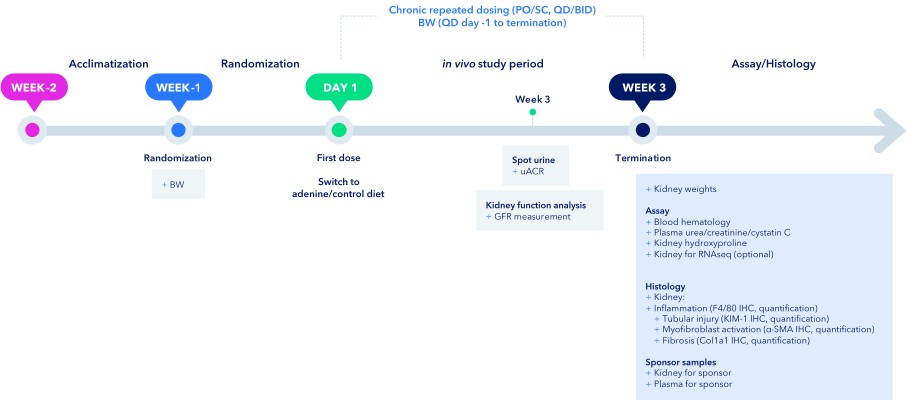
Standard study outline of the ADI model
A typical ADI study includes acclimatization, randomization, adenine diet induction, and compound treatment. Kidney function and injury are assessed throughout the study using urine, plasma, and tissue-based endpoints.
Endpoints & Readouts
The ADI model enables assessment of kidney function, renal injury, inflammation, and fibrosis through functional, biochemical, and histological endpoints.
Dapagliflozin reverses progressive weight loss
Dapagliflozin treatment reversed progressive weight loss and improved kidney weight in adenine diet-induced mice.
Figure 1. Dapagliflozin reverses progressive weight loss in ADI mice.
Body weight and left kidney weight were assessed throughout the study. Progressive weight loss was observed in vehicle-treated ADI mice, while dapagliflozin treatment improved both body weight and kidney weight.
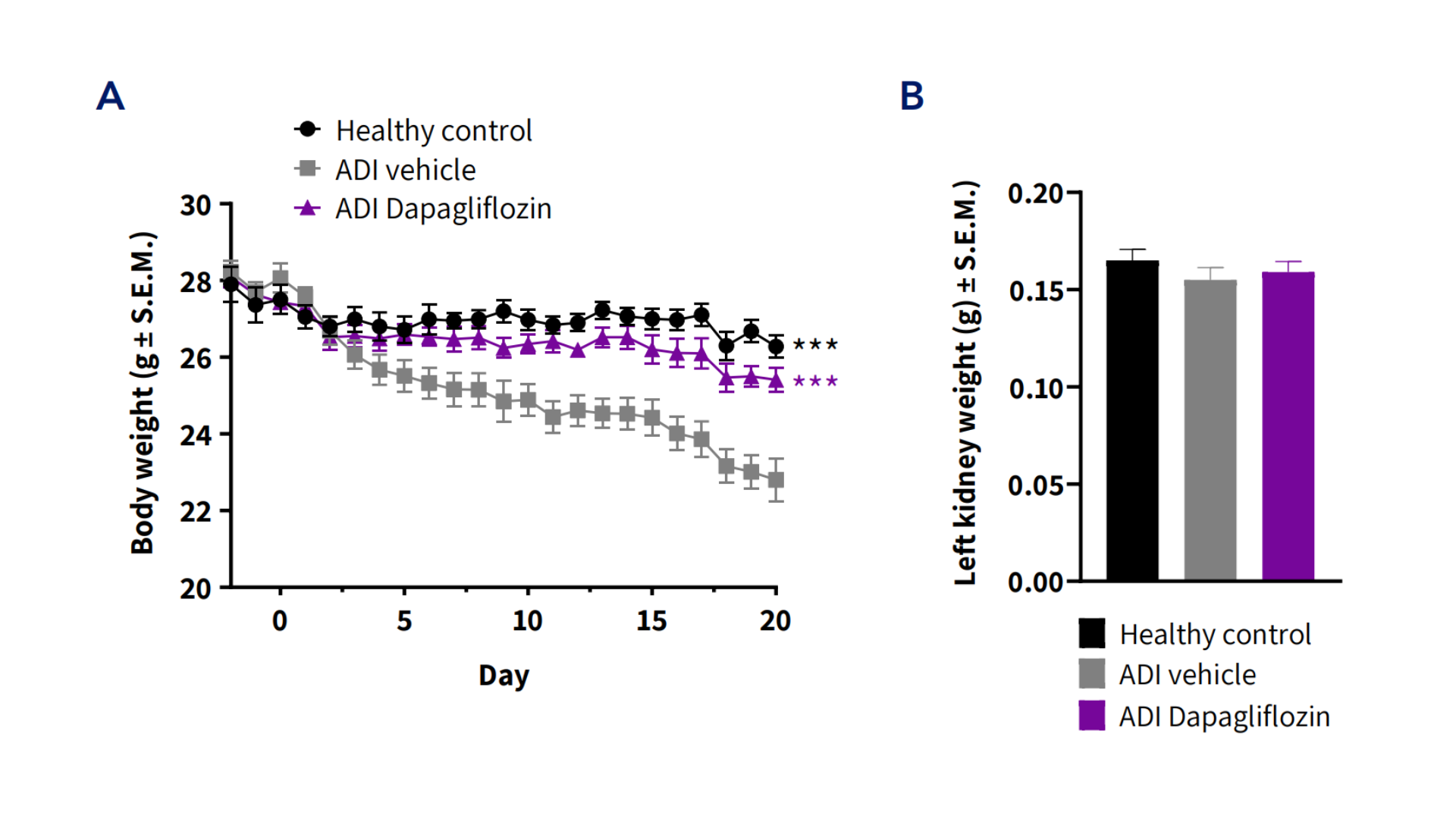
These findings demonstrate that the ADI model captures systemic manifestations of chronic kidney disease and their response to therapeutic intervention.
Dapagliflozin improves kidney function
Dapagliflozin treatment improved functional markers of kidney health, indicating attenuation of renal dysfunction in adenine diet-induced mice.
Figure 2. Dapagliflozin improves GFR and uACR.
Glomerular filtration rate (GFR), urine albumin-to-creatinine ratio (uACR), and urine cystatin C were evaluated at week 3. Dapagliflozin treatment improved GFR and reduced urinary markers of kidney injury compared with vehicle-treated ADI mice.
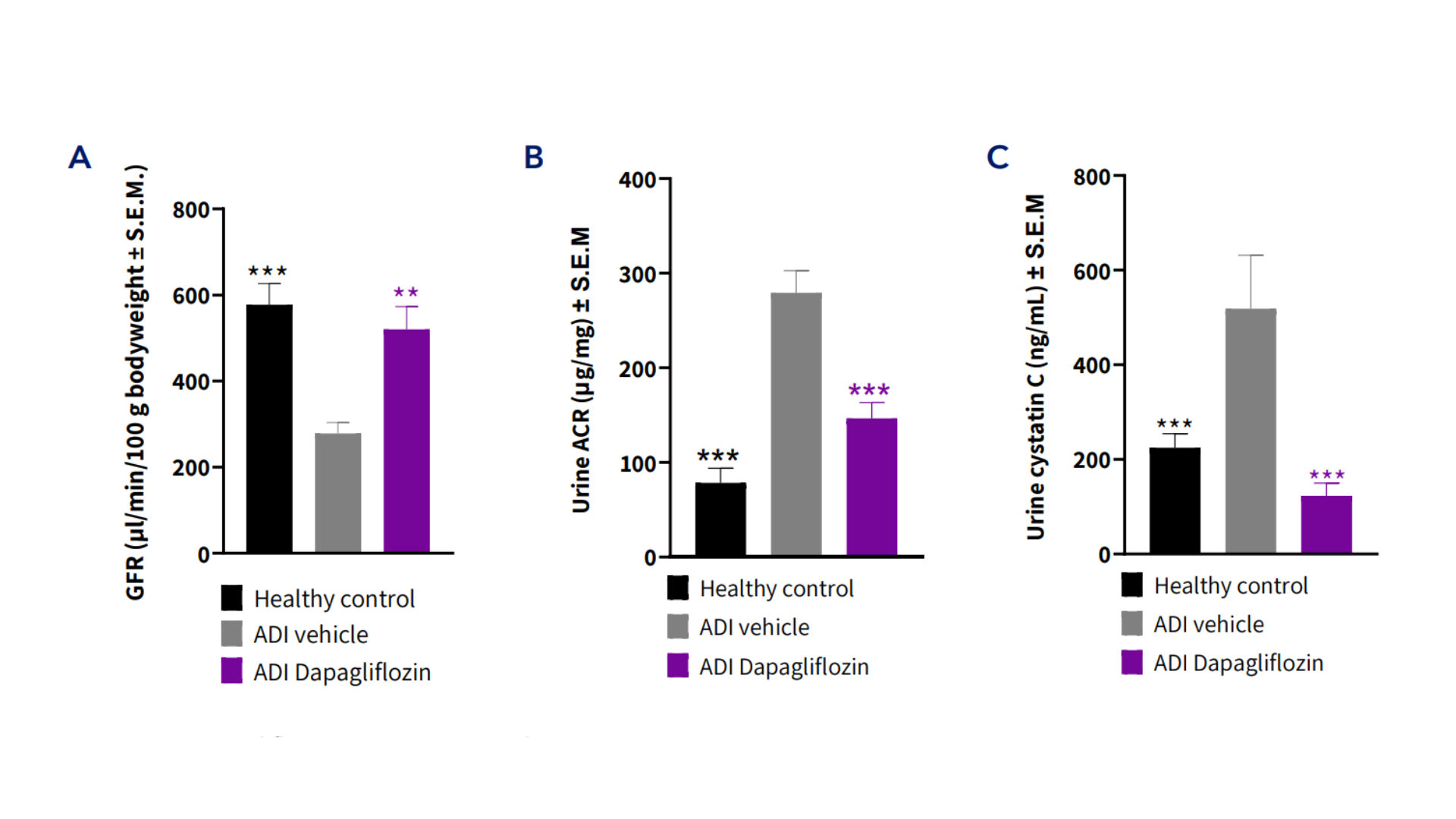
These results demonstrate that the ADI model provides clinically relevant and quantifiable measures of kidney function for evaluating nephroprotective therapies.
Reduced biochemical markers of kidney dysfunction
Dapagliflozin treatment reduced circulating biomarkers associated with kidney dysfunction and chronic kidney disease progression.
Figure 3. Dapagliflozin improves markers of renal function.
Plasma creatinine, plasma urea, and plasma cystatin C were measured on treatment day 21. Dapagliflozin treatment reduced all three biomarkers compared with vehicle-treated ADI mice.
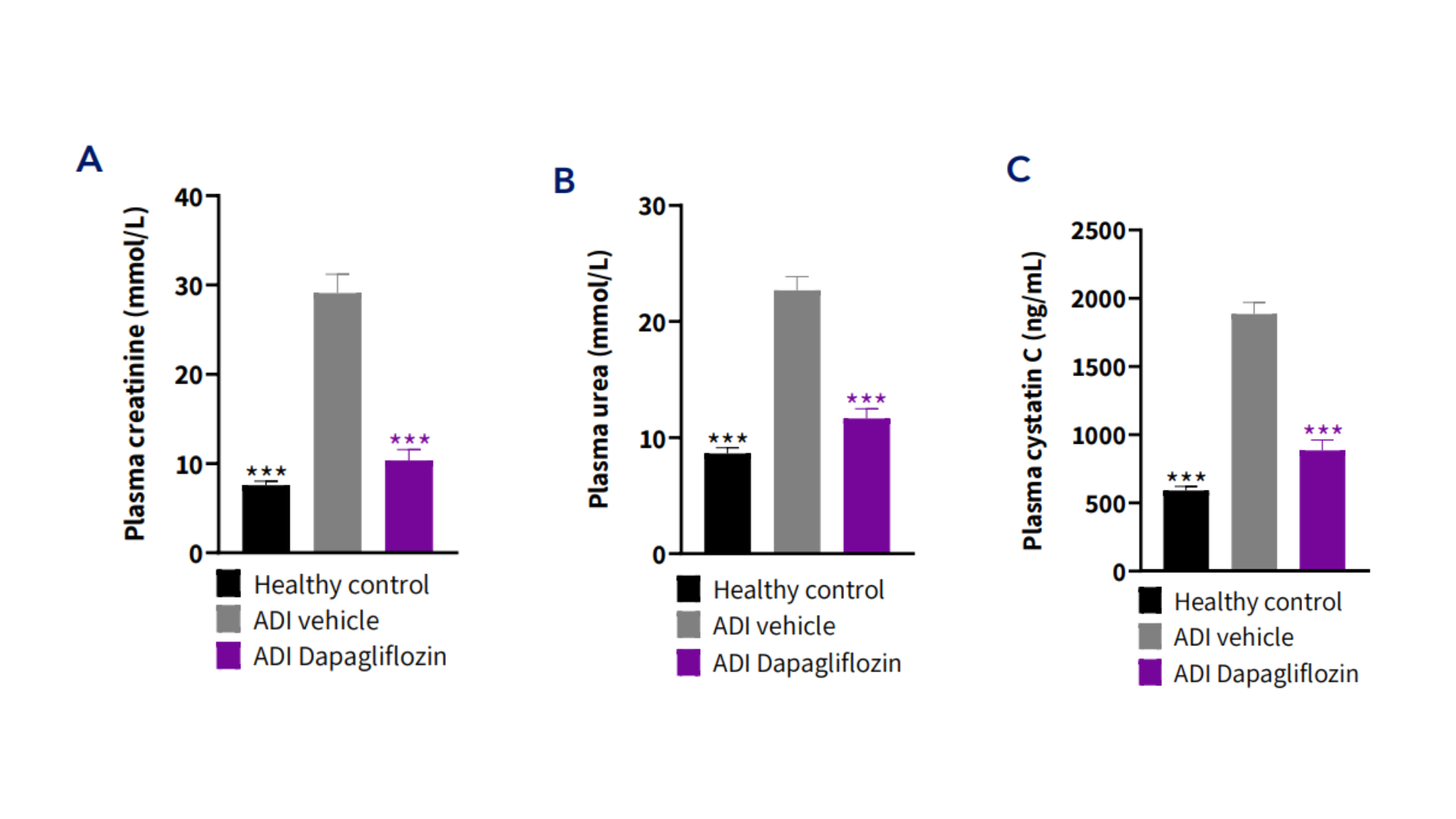
These findings demonstrate that the ADI model supports assessment of treatment effects on systemic biomarkers associated with chronic kidney disease.
Reduced kidney injury, inflammation and fibrosis
Dapagliflozin treatment reduced tubular injury, renal inflammation, fibrosis, and tissue remodeling in adenine diet-induced mice.
Figure 4. Dapagliflozin reduces histological markers of kidney injury.
Quantitative immunohistological assessment was performed for kidney injury molecule-1 (KIM-1), macrophage marker F4/80, alpha smooth muscle actin (α-SMA), and collagen type III alpha 1 chain (Col3a1). Dapagliflozin treatment reduced expression of all four markers compared with vehicle-treated ADI mice.
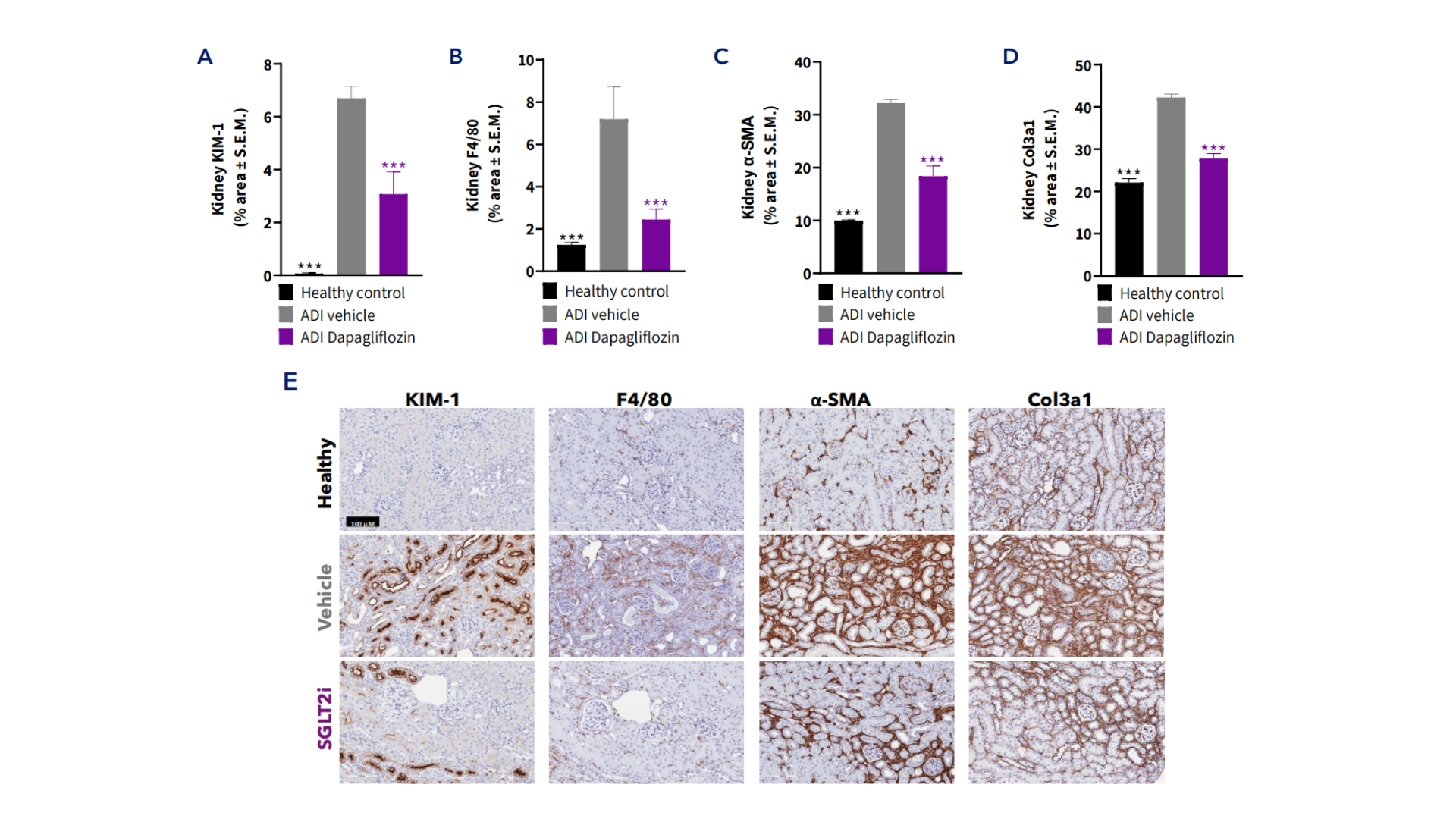
These results demonstrate that the ADI model provides robust histological endpoints for evaluating kidney injury, inflammation, and fibrosis.
FAQ
Frequently asked questions about model performance, applications, and study design.
The adenine diet-induced (ADI) mouse model is a preclinical model of chronic kidney disease (CKD) generated through dietary administration of adenine. The model develops progressive renal dysfunction, inflammation, and fibrosis, making it suitable for evaluating nephrotective and anti-fibrotic therapies.
Yes. The ADI model demonstrates reduced glomerular filtration rate (GFR), a key functional feature of chronic kidney disease. In the poster study, treatment with dapagliflozin improved GFR compared with vehicle-treated ADI mice.
The ADI mouse model supports assessment of multiple functional kidney endpoints, including glomerular filtration rate (GFR), urine albumin-to-creatinine ratio (uACR), urine cystatin C, plasma creatinine, plasma urea, and plasma cystatin C. These endpoints provide a comprehensive assessment of renal function and disease progression.
Yes. The ADI model responds to clinically relevant standard-of-care therapies. In the poster study, the SGLT2 inhibitor dapagliflozin improved kidney function and reduced multiple markers of kidney injury, supporting the translational relevance of the model.
Yes. The ADI model develops both renal fibrosis and inflammation. Histological assessment demonstrated increased expression of fibrosis markers, inflammatory markers, and kidney injury markers, which were reduced following treatment with dapagliflozin.
For further information
Contact us
Gubra
Hørsholm Kongevej 11B
2970 Hørsholm
Denmark
+45 3152 2650